REVIEW · CABO SAN LUCAS
Whale and Dive Combo Tour in Los Cabos
Book on Viator →Operated by Cabo Private Guide · Bookable on Viator
Morning whales, two reef swims, zero stress. This Cabo San Lucas tour starts at El Arco and lines up a full 1.5 hours of humpback whale spotting, with an expert crew scanning for breaches and close passes. Then you head to the bay side for a small-boat experience that keeps the group tight and the pace easy to follow.
What I like most is the structure: two guided underwater sessions matched to your comfort, plus a tight 1:4 instructor-to-diver ratio that makes a big difference when you’re excited but nervous. You also get a small brunch and a quick sightseeing loop around the Arch and scenic bay area, which turns the early start into something more pleasant than a rushed wake-up.
The main drawback to plan around: it’s a 6:30am departure and it runs on real ocean conditions. If weather is rough, the activity can be changed or canceled, and the “come back and look again” whale timing depends on the day’s sightings.
In This Review
- Key things that make this tour work
- A 6:30am start that actually makes sense near El Arco
- Humpback whale spotting: how the timing and approach improve your odds
- Small brunch plus Arch views: the calm before the adrenaline
- The first reef stop: what to expect when you switch from whales to underwater life
- Surface interval strategy: using the half hour to keep the morning magical
- Second underwater session in a different location: better coverage, not just a repeat
- Marine wildlife you should aim to spot (and how to think about it)
- Who this whale-and-scuba combo is best for
- Price and value: is $260 worth it?
- Weather, timing, and how to plan a smoother morning
- Should you book the Whale and Dive Combo in Los Cabos?
- FAQ
- FAQ
- What time does the tour start?
- Where is the meeting point?
- How long is the tour?
- Is the tour offered in English?
- What is the group size limit?
- How many underwater sessions are included?
- Do I get extra help if I haven’t been in the water recently?
- What is the instructor-to-diver ratio?
- Do I need good weather for the experience?
- Can I cancel for a full refund?
Key things that make this tour work
- Small group size (max 8) keeps attention on you, not on the clock
- El Arco stop built into the morning gives you an iconic start before you hit the water
- 1.5 hours on humpbacks with chances for close, acrobatic breaches
- Two different reef sites increase the odds of seeing different wildlife and corridors
- 1:4 instructor-to-diver ratio supports both new-to-recent divers and confident divers
- Free refreshers if it’s been about a year since your last underwater time
A 6:30am start that actually makes sense near El Arco
I get it: early tours can feel like punishment. Here, the early start is part of the value because it puts you in the right light and timing window for watching humpbacks in the bay area. The tour begins at 6:30am at Cabo Private Guide Plaza Nautica (Blvd. Paseo de la Marina 1, Centro, Marina, 23450 Cabo San Lucas). You end back at the same meeting point, which saves you from adding a second transport puzzle.
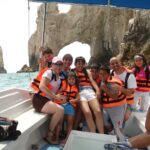
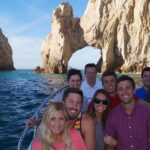
The other smart move: before the whale window, you get a small brunch and a short tour that includes El Arco de Cabo San Lucas and the surrounding scenic bay area. That matters more than it sounds. When you’re about to spend a morning scanning the water, having food onboard (not later, not “after you’re starving”) keeps the vibe calmer and helps nervous people settle in faster.
If you’re the type who hates being rushed, you’ll likely appreciate that this day is paced in clear segments: sightseeing and food first, then a focused whale search, then structured underwater time.
You can also read our reviews of more whale watching tours in Cabo San Lucas
Humpback whale spotting: how the timing and approach improve your odds
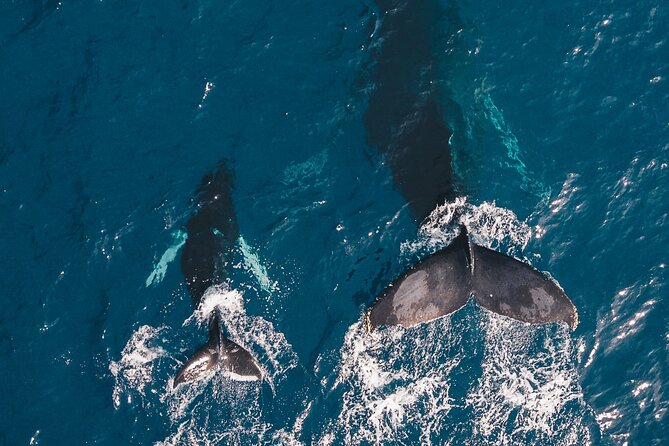
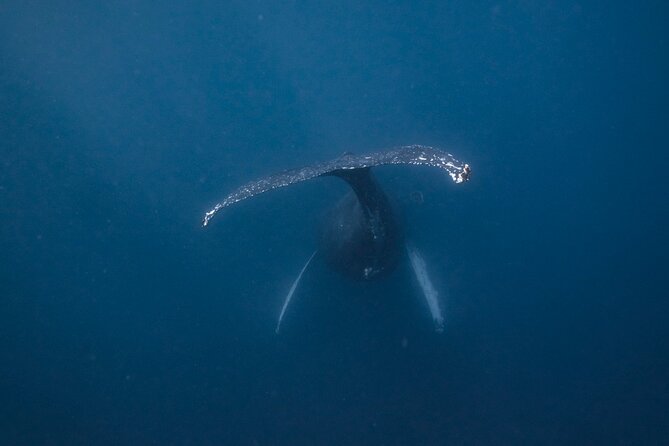
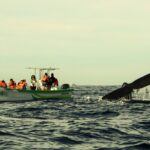
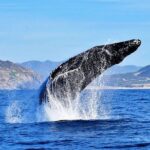
This is a 1.5-hour humpback whale watch led by an expert crew that looks for whales breaching at the surface. The focus is not just on “seeing something,” it’s on the kind of behavior that makes the trip feel like a real bucket-list moment—acrobatic breaches and close activity.
Here’s the part I’d underline if you want the best experience: the tour builds in a second whale chance. After your first underwater stop, there’s a surface interval of about half an hour where you can look for whales again in the nearby area. That means you’re not locked into one whale window where everything rides on one sighting.
You might also get a bonus layer of whale behavior beyond surface views. The tour’s description includes the possibility of hearing whales singing underwater once you’re in the water, and that’s the kind of detail that turns a standard sighting into a memory that feels more personal.
And because the operation tries to stay flexible with where it reefs you for the first underwater session, your whale watch isn’t treated like a separate, unrelated activity. The guide plans the next step based on where the whales are showing up.
Small brunch plus Arch views: the calm before the adrenaline
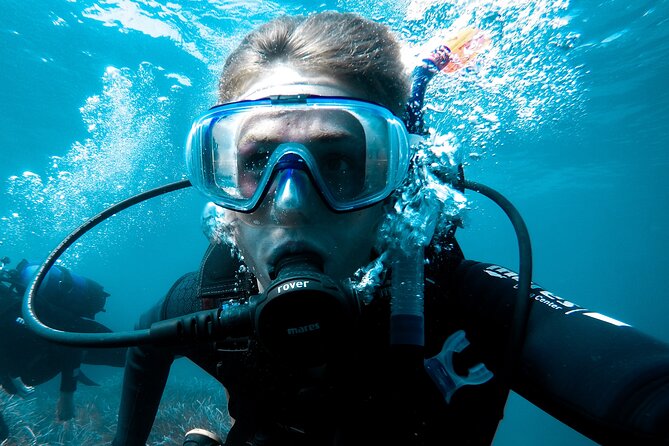
A lot of tours scatter food around like an afterthought. This one gives you a small brunch as part of the morning plan and pairs it with a tour of El Arco and nearby scenery. The practical benefit is simple: you’re more comfortable on the boat, and you can focus on spotting whales instead of worrying about hunger or feeling underfed in salty morning air.
El Arco also sets the tone. It’s the kind of sight that immediately feels like Cabo—sharp rock, dramatic coastline, and that classic “I’m really here” effect. Even if you’re chasing wildlife, a good first visual helps you get in the right mindset for what comes next.
The first reef stop: what to expect when you switch from whales to underwater life
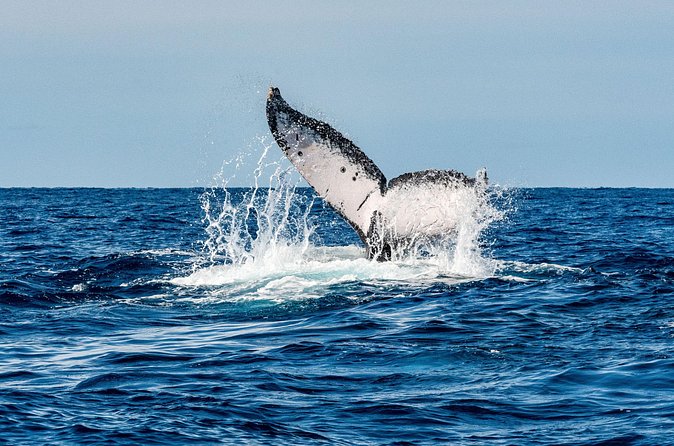
After whale watching, your guide picks a reef near where you were seeing the whales. That planning choice matters. When the operation links the whale area to the first underwater site, it increases the odds of you staying in the same “marine zone” rather than jumping to a random spot.
The tour also frames this as a possibility-driven experience. You might have whales swim by, and you might even catch those underwater vocalizations. Even when whales don’t show up in-water, the reef visit is still designed to deliver wildlife variety.
In-water life you may see includes pufferfish, rays, eels, octopus, and reef shark, with more wildlife expected depending on conditions and the exact reef. And because your group has a tight 1:4 instructor-to-diver ratio, you’re not treated like you’re on your own. This is the kind of support that helps you enjoy the moment instead of spending the whole time managing stress.
If you haven’t done an underwater session in about a year, the tour includes free refreshers. That’s a meaningful inclusion for people who want to try again without feeling rusty.
Surface interval strategy: using the half hour to keep the morning magical
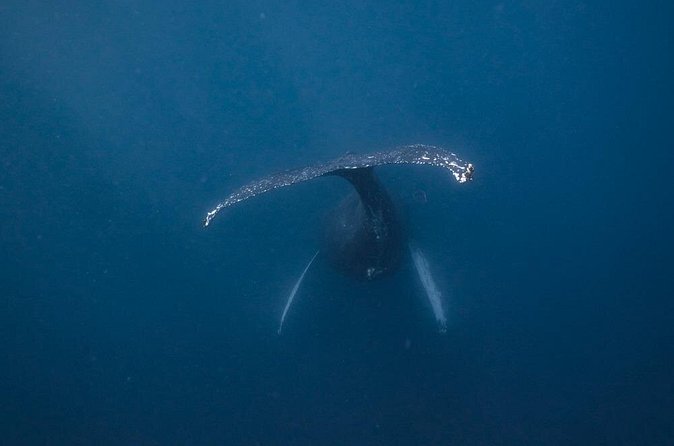
After the first underwater time, you’ll get a surface interval of roughly 30 minutes. This isn’t just rest for the sake of rest; it’s a built-in chance to look back for whales in the nearby area.
This design benefits you in two ways:
- If whale activity is strong early, you might catch fresh breaches close to where you just were.
- If whale sightings were slow during the first watch, this gives you a second attempt instead of closing the book after one missed moment.
It’s also a mental reset. Coming up from underwater can make you hyper-aware of what you just experienced. A planned surface window helps you transition smoothly rather than feeling like the day is only about one segment.
You can also read our reviews of more scuba diving tours in Cabo San Lucas


Second underwater session in a different location: better coverage, not just a repeat
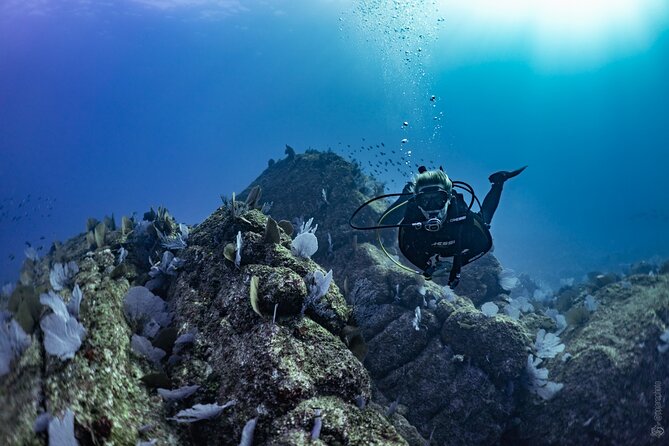
The second underwater stop happens at a different location. That’s one of the most important “quiet” upgrades in the whole tour, because it increases the odds that you see more than the same scenery twice.
The description emphasizes better coverage of the bay area and corridor, which is travel-speak for: you’re not stuck in one tiny pocket. You get a new reef context, new chances for wildlife, and a better shot at different behavior patterns.
Even for experienced divers, repeating the same reef is fine, but it rarely feels special. Here, the day is built around the idea that variety matters, and you’ll usually feel that variety in what you spot—rays gliding differently, eels peeking from new angles, and that “where did that come from?” feeling when a reef shark or octopus shows up where you didn’t expect.
Marine wildlife you should aim to spot (and how to think about it)
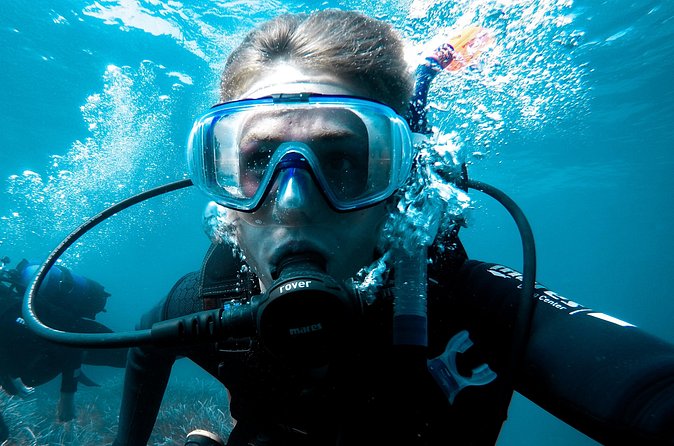
I love tours that tell you what’s realistic. This one sets you up for a lot of reef-life variety: pufferfish, rays, eels, octopus, reef shark, and more. The key is to treat these as likely possibilities, not guarantees.
A helpful mindset: watch for movement patterns instead of trying to “spot everything.” Rays tend to use open space and sand edges; octopus often rewards patient scanning near structure; eels can be spotted when you look for a “line” that suddenly becomes an animal. Reef sharks (when they appear) are often a presence-first experience—watching the way they glide can be more revealing than chasing a single pinpoint sighting.
Because you’ll have guided time and a good instructor-to-diver ratio, you’ll spend less energy figuring out where to look and more energy actually seeing.
Who this whale-and-scuba combo is best for
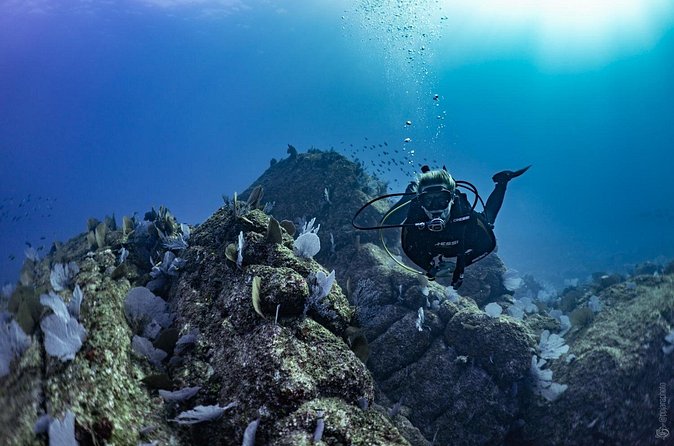
This is a strong fit if you want both the spectacle (humpbacks breaching) and the hands-on ocean time (two underwater sessions). It also makes sense if you’re traveling with a mix of comfort levels, since the experience is structured with instruction support and refreshers.
The tour is designed for moderate physical fitness—think: you can handle morning boat time and getting in and out of the water as directed. It’s also offered in English, with mobile ticketing.
Also, keep in mind the group limit: it has a maximum of 8 travelers. That’s a meaningful detail. Smaller groups typically mean less waiting, more direct guidance, and fewer people trying to manage the same moment at once.
If you’re nervous, you’re not the only one. Some guides (like Xo and Javi, based on feedback) are known for helping people calm down and stay present. Other guide names that have come up include Morgan, Diego, and Cesar, praised for keeping the experience fun and for helping divers feel confident underwater.
Price and value: is $260 worth it?
At $260 per person for about 5.5 hours, the price can feel steep at first glance. Here’s why it can still be good value for the right traveler.
You’re paying for a combo day with:
- a long-enough 1.5-hour humpback whale watch
- a sightseeing loop that includes El Arco
- two separate reef underwater sessions at different sites
- a small group (max 8)
- tight instructor support (1:4 ratio)
- free refreshers if it has been about a year since your last underwater time
If you price out those elements separately—boat time for whale watching, guided reef time, and the added instructor attention—the combo format often works out better than booking pieces independently. And the small group limit is a real value driver because it’s not just a “more intimate” claim; it directly affects how much attention you get.
The other value angle: time. You’re getting whale sightings and reef wildlife in one morning instead of spending a whole extra day chasing one side of the experience.
Weather, timing, and how to plan a smoother morning
This experience requires good weather. If conditions are poor, you’ll be offered a different date or a full refund. That’s the cost of working in open water, but it also means the operator is not trying to force it every day.
It also has a minimum number of travelers, so sometimes dates can shift if the group doesn’t meet that threshold. On the day you pick, the most practical strategy is to stay flexible mentally: if whales are quiet, you still have two reef sessions and a second whale-look window.
Finally, since you’re starting at 6:30am, you’ll want to treat this like a real morning mission. The day is built around early ocean conditions, so a late night and sluggish start can make everything feel harder than it needs to be.
Should you book the Whale and Dive Combo in Los Cabos?
If you want humpback behavior plus guided reef life in one morning, I’d say yes, book it—especially if you like structure, small groups, and real instruction support. The 1.5-hour whale window, the half-hour surface follow-up, and the two different reef locations are what make this feel like more than a simple “see whales then go underwater later” routine.
Skip it if you know you’ll struggle with early wake-ups or if you’re looking for a flexible, casual day that’s easy to reschedule on a whim. Since it depends on weather, you’ll also want to make peace with the idea that the ocean decides the plan sometimes.
If your goal is a memorable Cabo morning with humpback whales and serious ocean time, this is one of the stronger combo choices in Los Cabos.
FAQ
FAQ
What time does the tour start?
It starts at 6:30am.
Where is the meeting point?
The meeting point is Cabo Private Guide Plaza Nautica, Blvd. Paseo de la Marina 1, Centro, Marina, 23450 Cabo San Lucas, B.C.S., Mexico.
How long is the tour?
The total duration is about 5 hours 30 minutes.
Is the tour offered in English?
Yes, the tour is offered in English.
What is the group size limit?
The activity has a maximum of 8 travelers.
How many underwater sessions are included?
There are two underwater sessions at designated dive sites.
Do I get extra help if I haven’t been in the water recently?
Yes. Free refreshers are included for anyone who hasn’t been in the water as a diver in about the last year.
What is the instructor-to-diver ratio?
The tour provides a 1:4 instructor-to-diver ratio.
Do I need good weather for the experience?
Yes. The experience requires good weather, and if it’s canceled due to poor conditions you’ll be offered another date or a full refund.
Can I cancel for a full refund?
Yes. You can cancel for a full refund up to 24 hours before the experience starts.