REVIEW · CABO SAN LUCAS
Cabo: Whale-Whatching Boat Trip w/ All-Women Crew and Photos
Book on GetYourGuide →Operated by CABO NATURE · Bookable on GetYourGuide
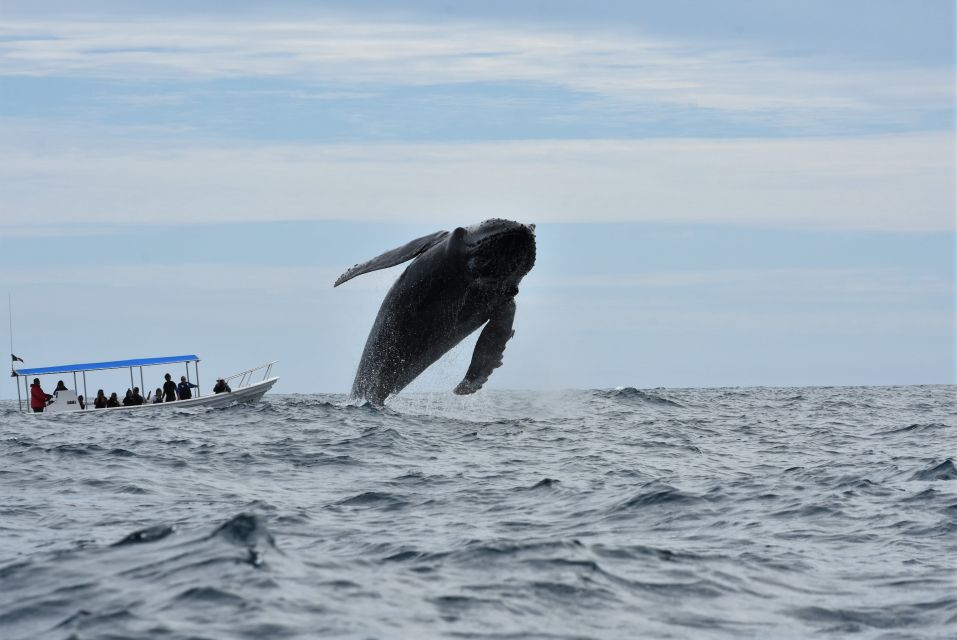
Cabo whale watching is usually a waiting game. Here, the odds feel better because you go out on a small 8-meter boat with a marine biologist and a whale-focused, respectful search plan. You also get a bonus sensory moment: the hydrophone that can turn whale behavior into something you can actually hear.
I like the tight format. You cover the classic Cabo sights (like the Arch) fast, then you’re back on the water for about 2 hours of real whale-spotting time. I also love that you’re not stuck chasing the perfect selfie. The crew handles photos for you, so you can watch with your eyes instead of your phone.
One thing to consider: you can get wet from spray. Bring the right layers, and remember this isn’t a dry museum visit.
In This Review
- Why This Cabo Whale Trip Feels Different Than Big-Boats
- Getting To La Terminal de Cabo: Easy Start, No Hotel Pickup
- The Arch Photo Stop: Quick Cabo Icon, Then Back to Whale Time
- Searching for Humpbacks (and Sometimes Greys): Pacific or Sea of Cortez
- The Hydrophone Moment: Hearing Whale Song Through the Water
- The Boat Setup: Small, Photo-Friendly, and Built for Real Viewing
- Marine Biologist + Crew Photos: Watching More, Snapping Less
- Water, Timing, and the Best Chances: Go in the Morning
- Whale Watching Warranty: A Real Plan B If You Don’t Spot Them
- Price vs. Value: Why $91 Can Feel Fair for Cabo
- What To Bring So the Weather Doesn’t Run Your Day
- Who Should Book This Tour (And Who Should Skip It)
- Does This Tour Help More Than Just Your Vacation Photos?
- Should You Book Cabo Nature Whale Watching?
- FAQ
- How long is the whale watching trip?
- What is the price per person?
- Where do I meet the guide?
- Is hotel pickup included?
- What’s included with the tour?
- Do I get to hear whales sing?
- Does the tour provide food?
- What should I bring?
- Who is the tour not suitable for?
- What if no whales are spotted?
Why This Cabo Whale Trip Feels Different Than Big-Boats
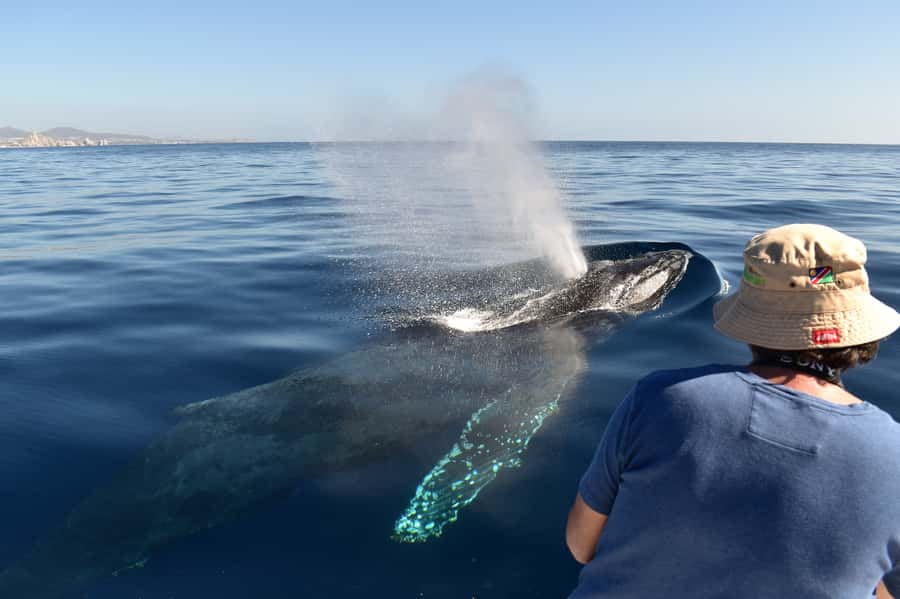
Small group size (max 12 guests) means you usually get better angles for spotting and photos, plus it feels less chaotic when whales surface.
All-women crew with marine biologist guidance adds a learning layer that doesn’t feel forced or lecture-y.
Guaranteed sightings policy gives you a real safety net: if you don’t see whales on the first tour, you get a second tour free.
Hydrophone whale song option turns the experience from visual only into sound, if timing and conditions allow.
Digital photos included means you can focus on the moment while someone else captures the close-ups.
Getting To La Terminal de Cabo: Easy Start, No Hotel Pickup
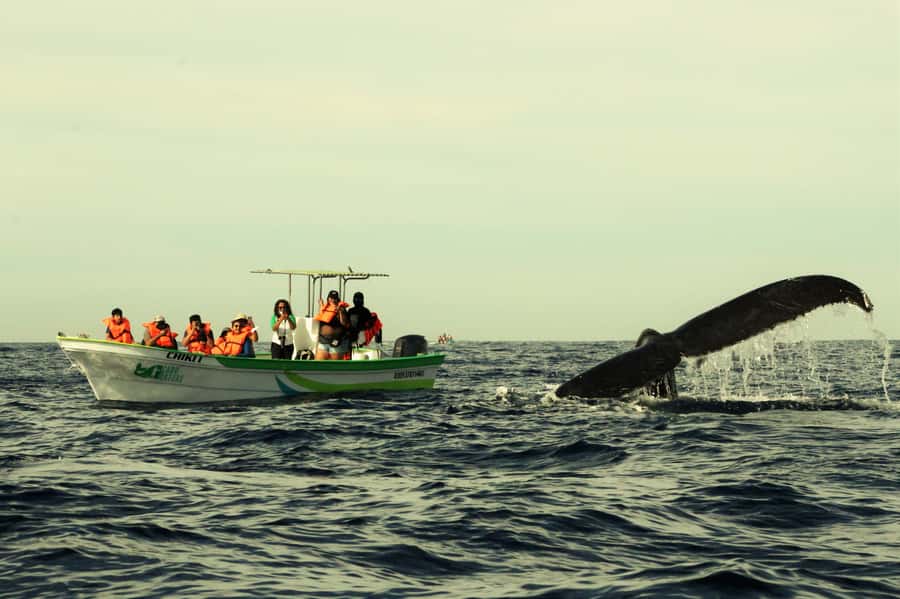
Your guide meets you in front of La Terminal de Cabo, right in front of Breathless Hotel. The guide will be wearing a green shirt with the Cabo Nature logo, so it’s pretty straightforward to find the group.
The tour does not include hotel pickup or drop-off. If you’re staying nearby, it’s simple. If you’re farther out, plan a short ride so you arrive early and unhurried.
You can also read our reviews of more boat tours in Cabo San Lucas
The Arch Photo Stop: Quick Cabo Icon, Then Back to Whale Time
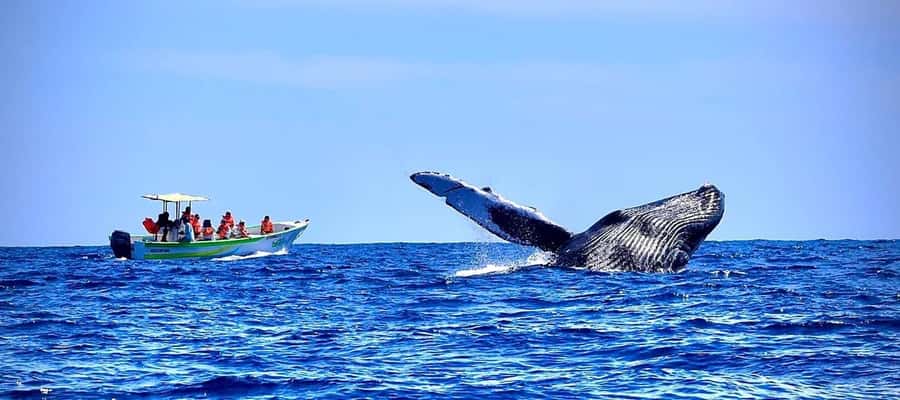
Before whale-spotting, the boat heads to top coastal sights, including a photo stop at the iconic Arch. This is a good setup because it gives you a sense of place without eating up your main whale time.
In practice, the Arch stop is the kind of “you’ll know it instantly” moment. It also helps you match what you’ve seen in photos online with what you’re seeing in person, so the rest of the cruise feels more anchored.
If you’re hoping for a long scenic drive-by, this tour won’t pretend to be that. The priority stays on whales.
Searching for Humpbacks (and Sometimes Greys): Pacific or Sea of Cortez
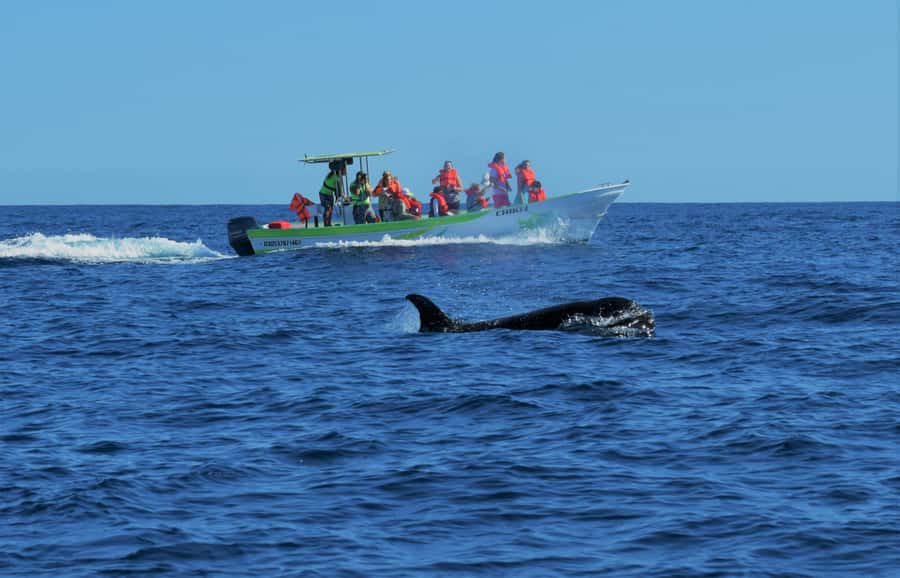
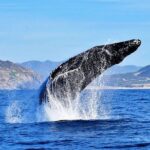
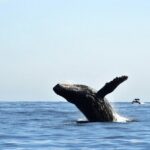
Once you’re out, the plan is straightforward: search for humpback whales in the Pacific Ocean or the Sea of Cortez, depending on weather conditions. That matters because whale watching is weather-dependent in a big way. Choppy water can change where whales are likely to be spotted safely.
A key detail for your expectations: this is an eco-minded trip. Multiple guides and captains on these tours are described as careful about respectful viewing distance. That’s not just good manners. It often leads to better sightings, because you’re not driving a high-speed chase that pushes animals away.
You can also run into other marine life. In the experiences shared, people reported gray whales, plus dolphins, sea lions, and even sightings like sea turtles and rays on some outings. That’s not guaranteed, but it explains why the trip still feels exciting even if whale behavior changes by day.
The Hydrophone Moment: Hearing Whale Song Through the Water
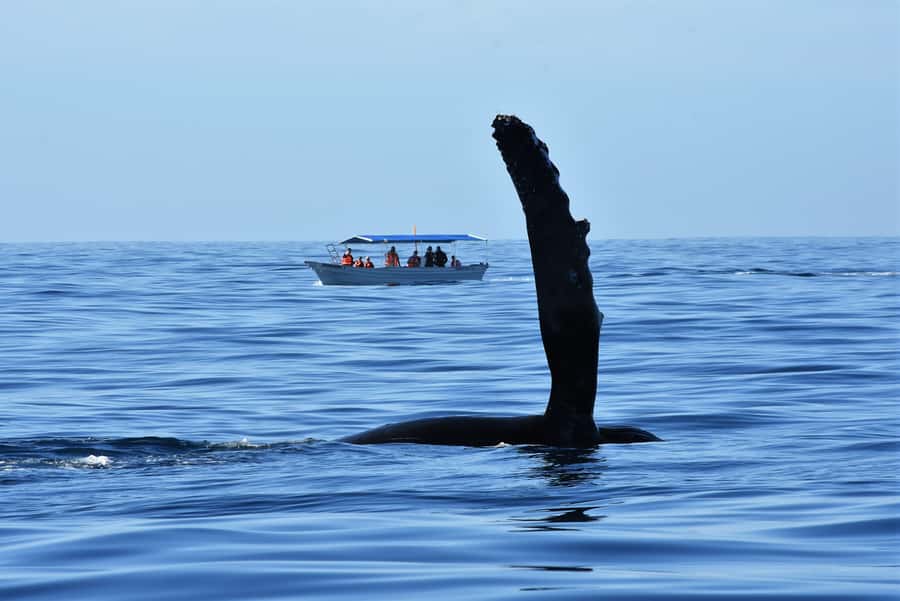
The standout “wow” factor here is the hydrophone. The tour includes it, and if you have time, you might get to hear the whales sing through the onboard system.
This changes how you experience the animals. Instead of only watching a surface event, you’re also tuning into communication that happens below. It’s the kind of moment where the group quiets down, and suddenly everyone is listening for something they can’t see.
Do plan for variability. The hydrophone portion is described as dependent on time and conditions, so think of it as a bonus highlight rather than something you should treat like a guaranteed performance every day.
The Boat Setup: Small, Photo-Friendly, and Built for Real Viewing
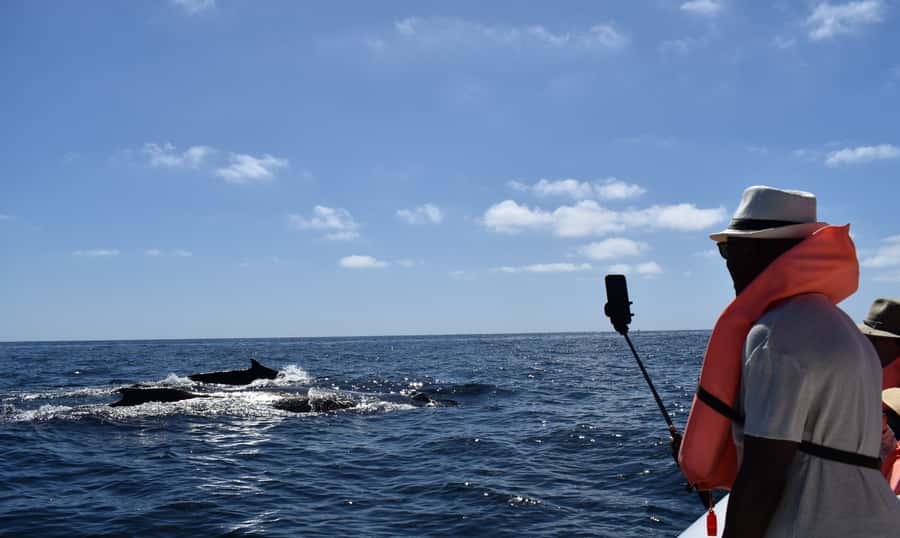
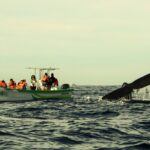
You’ll ride on a small 8-meter boat with a max group size of 12. Reviews also describe it as a covered, panga-style setup with good visibility for taking photos from multiple sides. The point is simple: when the boat is smaller, whales often feel closer and watching feels more personal.
There’s also an important comfort detail: you might get spray. Even when the ride is smooth, ocean wind and wave action can land a little water on you. On some tours, riders noted rain gear provided, which is the kind of practical touch that keeps the experience from turning into “sorry, I’m soaked” halfway through.
If you want a comfortable ride, pack for wind and temperature shifts, not just sun.
You can also read our reviews of more whale watching tours in Cabo San Lucas

Marine Biologist + Crew Photos: Watching More, Snapping Less
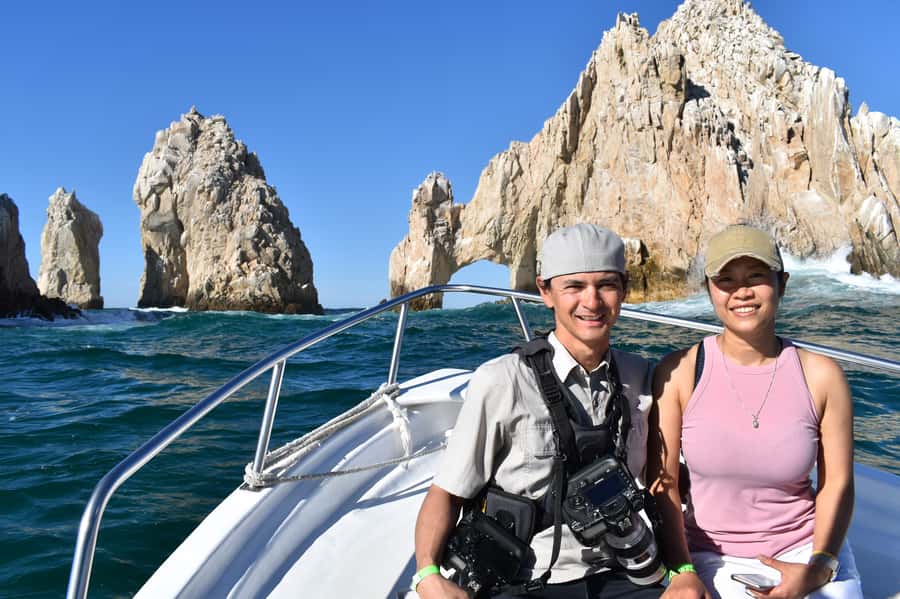
This tour includes a marine biologist on board, and many riders mention specific guides like Aurora, Nina, Maria, Mariana, and Mireya leading the experience. Captains also get praise by name, including Belem and Oscar, especially for finding whales and positioning the boat for good viewing.
I like this format because it’s not just “see whale, clap, leave.” You get explanations that help you read whale behavior better: what you’re seeing, why they act a certain way, and how communication works. When you understand a little, spotting becomes more than luck.
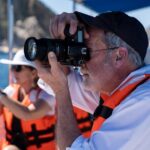
Then there’s the photo side. Digital photos are included, and riders often highlight how the crew takes photos so you can stay in the moment. You’re not stuck holding up your camera at arm’s length the whole time. You can actually watch, while the crew handles the capture.
Water, Timing, and the Best Chances: Go in the Morning
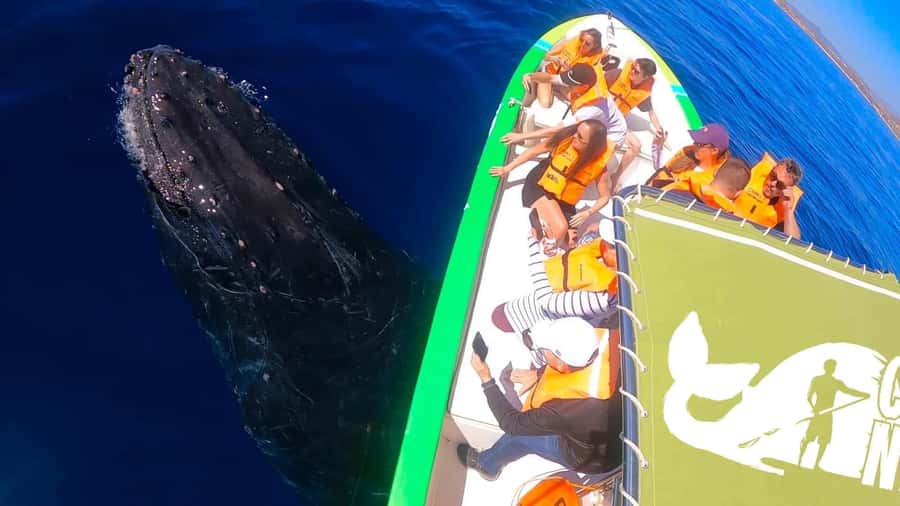
The trip runs for 2 hours and is usually available in the morning and afternoon. A helpful pro tip is that mornings tend to bring calmer waters and better sightings. That’s because calmer seas help spotting and make it easier to stay in the right areas.
If you’re choosing between morning and afternoon, I’d lean morning when you can. It’s not a promise of whales, but it improves the conditions your guide and captain are working with.
Whale Watching Warranty: A Real Plan B If You Don’t Spot Them
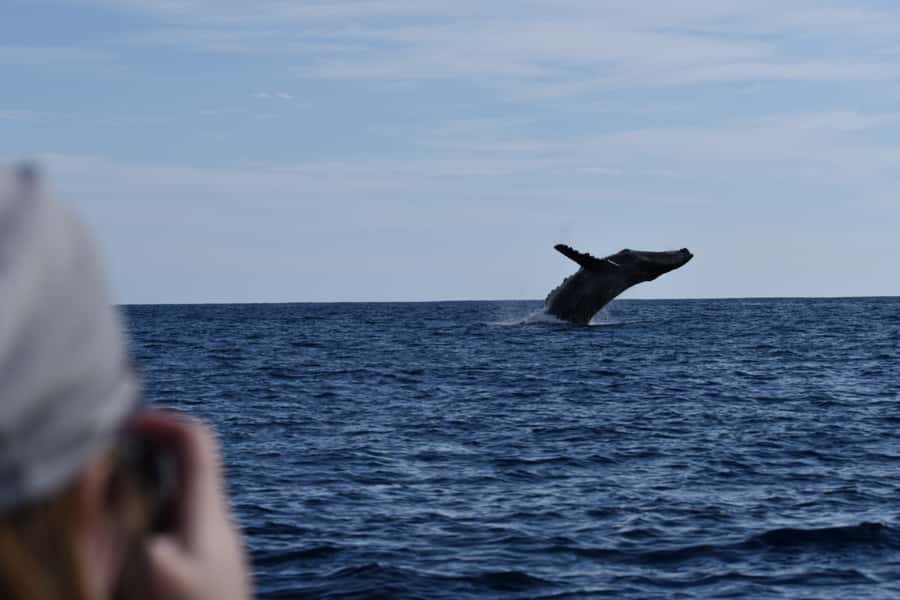
Whale watching isn’t a vending machine. Some days, whales are far less cooperative.
That’s why the tour includes a guaranteed sightings policy: if you don’t see whales during your first tour, you’re offered a second tour free of charge. For $91, this matters. You’re not just buying time on the water; you’re buying time on the water with a built-in safety net if conditions don’t line up.
It also reduces the mental stress of “what if today is the bad day?” You still want whales of course, but you aren’t left feeling like you lost money to weather.
Price vs. Value: Why $91 Can Feel Fair for Cabo
At $91 per person for a 2-hour, small-group whale-watching experience, you’re paying for three things: boat time, specialist expertise, and operational flexibility.
Here’s what makes it feel more like value than just a sightseeing add-on:
- Marine biologist included, not “someone with a phone and a hunch.”
- Hydrophone included, with the potential to hear whale song.
- Photos included, which adds real convenience when you want memories without managing your own camera settings.
- Second-tour free policy if whales aren’t spotted the first time.
When you compare that to tours that only provide boat rides and minimal guidance, this one earns its price in the moments that matter: understanding what you’re seeing and capturing it without distraction.
What To Bring So the Weather Doesn’t Run Your Day
This is the list I’d follow from the tour guidance:
- Warm clothing (yes, even in Cabo)
- Sunglasses
- Camera
- Biodegradable sunscreen
- Jacket
And one more practical point: wear layers. You want to adapt quickly if the wind rises or the sun drops behind clouds.
Also, remember you may get wet from wave spray. If you hate feeling damp, bring clothing you can comfortably stay in for two hours.
Who Should Book This Tour (And Who Should Skip It)
This experience fits best if you want:
- A small-group whale watch (max 12)
- Real wildlife focus with a marine biologist on board
- A chance at underwater whale song through the hydrophone
- Included digital photos, so you can watch hands-free
Skip it if you fall into the listed non-suitable categories. It’s not suitable for children under 5, pregnant travelers, and people with back/neck issues.
If you’re sensitive to rougher conditions, also think twice about timing. Morning is calmer, and calmer seas make everything easier.
Does This Tour Help More Than Just Your Vacation Photos?
By booking, you’re supporting additional ocean-related work, including beach cleanups and whale rescue efforts, plus women’s empowerment in ocean conservation. That’s a meaningful layer because it ties your tour fee to real-world conservation efforts rather than only a one-day wildlife show.
It doesn’t change whether whales appear, but it does add purpose to the trip.
Should You Book Cabo Nature Whale Watching?
If you want a Cabo whale-watching trip that feels respectful, guided, and built around actually seeing whales (not just touring for the sake of it), I’d book it. The combo of a marine biologist, hydrophone, small group size, included photos, and a second-tour free warranty makes this one of the more practical choices.
I’d especially choose it if:
- You’re tight on time and want a focused 2-hour experience
- You care about conservation-friendly behavior and distance
- You’d enjoy hearing whale song, not just spotting whales
I’d think twice if:
- You’re not comfortable getting wet from spray
- You can’t do boat movement well (given the back/neck issue guidance)
Bottom line: for Cabo whale watching, this is the kind of tour that respects the animals, protects your attention, and gives you memories you don’t have to fight to capture.
FAQ
How long is the whale watching trip?
The tour duration is 2 hours.
What is the price per person?
The price is $91 per person.
Where do I meet the guide?
Meet your guide in front of La Terminal de Cabo, right in front of Breathless Hotel. The guide wears a green Cabo Nature logo shirt.
Is hotel pickup included?
No. Hotel pickup and drop-off are not included.
What’s included with the tour?
Included items are guaranteed sightings (second tour free if no whales are seen on the first), digital photos, hydrophone, bottled water, and a marine biologist on board.
Do I get to hear whales sing?
The hydrophone is included, and if time allows, you may be able to hear the whales singing through it.
Does the tour provide food?
No. Food is not included.
What should I bring?
Bring warm clothing, sunglasses, a camera, biodegradable sunscreen, and a jacket.
Who is the tour not suitable for?
It’s not suitable for children under 5, pregnant women, and people with back/neck issues.
What if no whales are spotted?
There is a whale-watching warranty. If you don’t see any whales during your tour, you’re offered a second tour free of charge.