REVIEW · CABO SAN LUCAS
Whale Watching Tour in Cabo San Lucas
Book on Viator →Operated by Dive Ninja Expeditions · Bookable on Viator
Big whales, close-up energy, and real whale song. This Cabo San Lucas outing combines comfortable small-boat viewing with an underwater hydrophone so you can hear what humpbacks are doing beneath the surface. It also runs along the wild, mountainous Baja coastline, where you’re not just watching wildlife—you’re learning how these animals fit into the ocean around the peninsula.
I love the way this tour keeps the experience focused on spotting and respecting whales: smaller groups, skilled captains, and guides who bring context to every encounter. I also like that your ticket supports conservation work through a campaign aimed at protecting whales with research and reporting. One thing to think about first: whale sightings can never be guaranteed on the day, and the trip does depend on good weather.
In This Review
- Key Things I’d Watch For
- Price and value: what $85 gets you in Cabo San Lucas
- Meeting at Dive Ninja Expeditions in downtown Centro
- The 2.5 hours on the water: cruise, listen, and watch for action
- Humpbacks in Cabo: why migration timing changes everything
- The whale-song bonus: what the underwater hydrophone adds
- Small group of 6: more attention, less chaos
- Wildlife respect: how to get thrill without turning it into chaos
- Whale Defender: why your ticket supports more than a photo
- Weather and whale timing: the one reality check
- Who should book this Cabo whale watching tour?
- Should you book it? My practical take
- FAQ
- How long does the whale watching tour in Cabo San Lucas take?
- What is the price per person?
- Where is the meeting point?
- Do I get a mobile ticket?
- How many people are on the tour at most?
- What happens if the tour is canceled due to weather?
- What if the minimum number of travelers isn’t met?
- Is it easy to cancel if plans change?
- Is this tour suitable for most travelers?
Key Things I’d Watch For
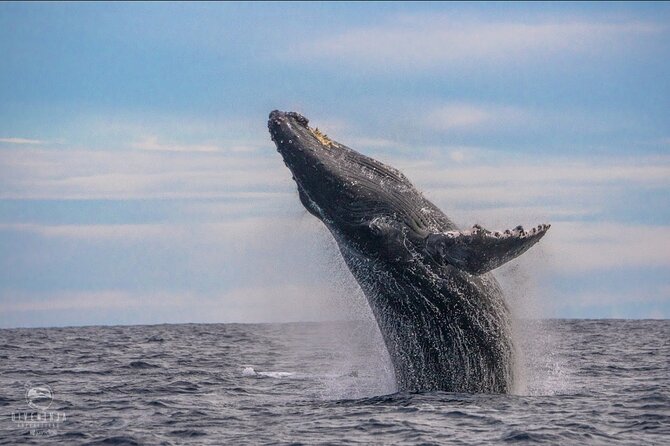
- Underwater hydrophone: Hear whale songs through the hydrophone system while you’re out on the water
- Small group feel (max 6): More personal guidance and less crowd energy during whale-spotting
- Close viewing potential: Positioning on the water is part of the goal, not just cruising around
- Real species variety: Along with humpbacks, you might see dolphins, sea lions, and even other whales
- Baja coastline cruise: Scenic views plus wildlife searching during the same 2.5 hours
Price and value: what $85 gets you in Cabo San Lucas
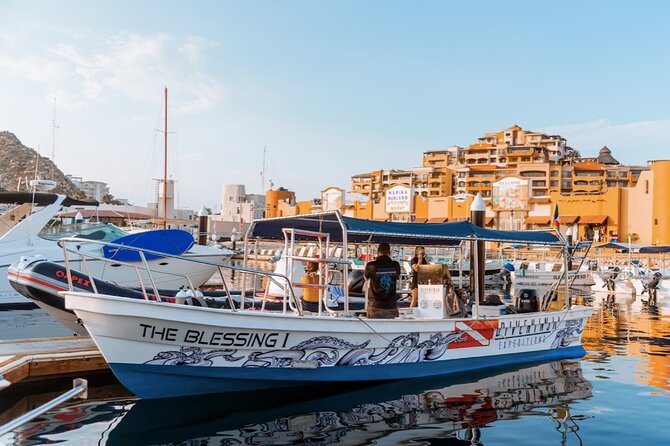
$85 per person for about 2 hours 30 minutes is a fairly solid value for Cabo whale watching—especially when you’re paying for more than a boat ride. This tour is designed around three things that matter on the water: finding whales, getting in the right viewing position, and making the whole experience educational through active guidance and an underwater listening setup.
A lot of whale tours advertise spotting. What you’re really paying for here is the combination of (1) comfortable, spacious boats and (2) knowledgeable captains and passionate guides who help you understand what you’re seeing. The hydrophone system is the big “why this one” factor too. Hearing whale song underwater turns the trip from just visual thrills into something you carry home.
One more quiet value point: the operator uses mobile tickets. That’s one less thing to manage while you’re traveling and trying to get to the meeting point on time.
You can also read our reviews of more whale watching tours in Cabo San Lucas


Meeting at Dive Ninja Expeditions in downtown Centro
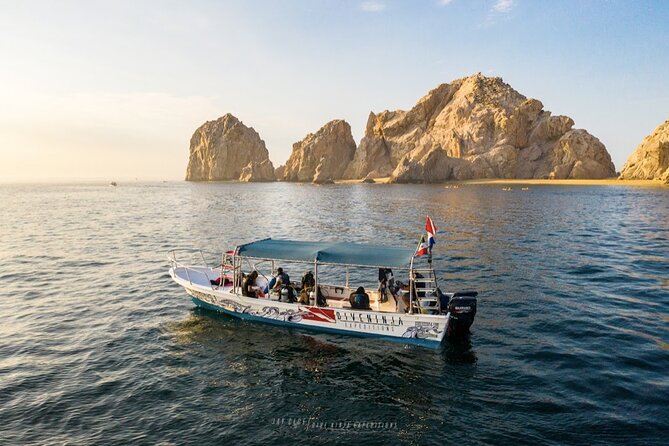
You’ll start at Dive Ninja Expeditions at Ignacio Zaragoza 345 Esq, 16 de Septiembre, in Downtown/ Centro, Cabo San Lucas (23450, B.C.S., Mexico). The tour ends back at the meeting point.
This location choice matters more than it sounds. Being in/near downtown Centro helps you plan your day without building a complicated transport puzzle. The listing also notes it’s near public transportation, which is great if you’re not renting a car or you want an easy morning run.
Group size is capped at 6 travelers, so give yourself a little buffer when you arrive. With a small crew, the day can run on a tighter rhythm than mega-boat operations. You’ll want to be ready to board when they’re ready to go.
The 2.5 hours on the water: cruise, listen, and watch for action
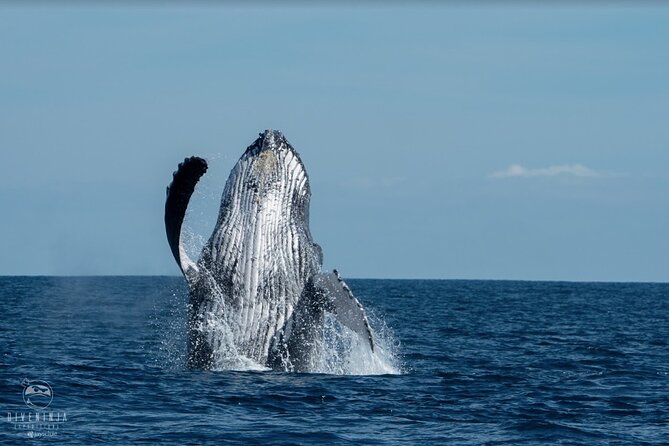
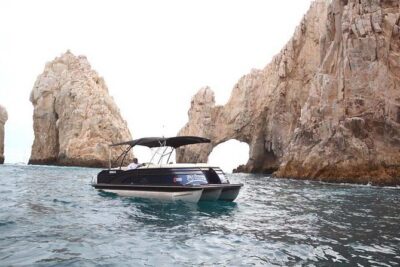
The trip itself is roughly 2 hours 30 minutes, and it’s built around time on the water near the Baja peninsula. You’re not just sitting and hoping. The whole format is about cruising alongside the rugged coastline and then using that time to locate whale activity.
Here’s what that usually means for your experience arc:
1) Board and get oriented
Before you get too focused on scanning the water, the crew sets you up with what to look for. You’ll learn what behaviors typically signal whales are nearby. It’s the difference between watching randomly and knowing what your eyes are hunting.
2) Cruise along the coastline while you scan
The Baja coast here is dramatic—mountainous and wild-looking. Even when whales are still a bit out, the scenery keeps the time moving. And the captain’s job is to move with purpose, not just drive around.
3) When whales show up, viewing becomes the priority
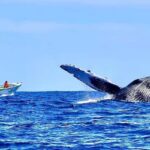
This is where the tour’s positioning style can pay off. Reviews highlight how Captain Miguel positioned people correctly so they could experience a full body breach and splash-down at close range. That kind of “stand where it matters” guidance is exactly what you want on a whale-watching boat.
4) Listen with the hydrophone while you’re watching
Even when the action is subtle—blow, tail movement, quiet surfacing—the hydrophone adds a layer you can’t get from the deck alone.
5) Return to the meeting point
Then you’re back where you started, ready to keep exploring Cabo without committing the entire day to the ocean.
Humpbacks in Cabo: why migration timing changes everything
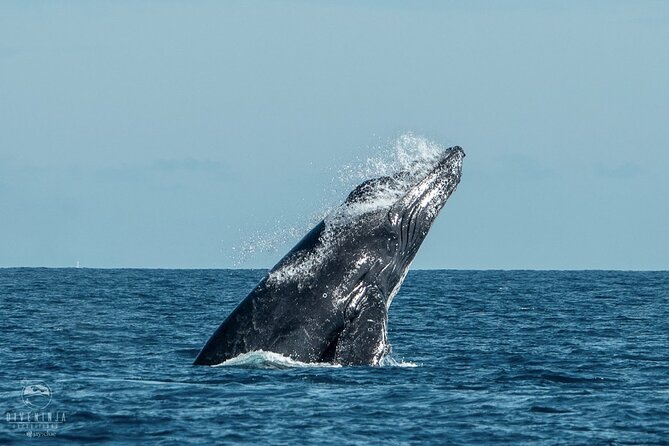
Cabo San Lucas is a major stop on the humpback migration. Each year, humpbacks move into these warmer waters, and mothers bring calves along. That’s why this tour’s whale focus isn’t only about seeing whales—it’s about understanding the life cycle happening right there in front of you.
Based on the tour description, here’s what the crew is likely to explain during the outing:
- Mothers teach calves behaviors like tail lob, fin slaps, and breaching
- Males compete for the attention of females
- Whale song and dance fill the peninsula area during active periods
One more context piece: this region is described as home to about one-third of the world’s marine mammals. That’s why it’s not unusual to see dolphins and sea lions, and why some trips may include other whale species.
Last year’s sightings (as shared in the tour info) included the possibility of blue whales, fin whales, and orcas, plus massive pods of dolphins. You can’t count on all of that every trip, but it’s a strong hint that the water here stays biologically active.
If you’re traveling late in the migration window, your expectations should soften a notch. The upside is that whale-watching isn’t only about big fireworks. Even a smaller number of whales can still mean memorable behavior—like a mom-and-baby moment.
The whale-song bonus: what the underwater hydrophone adds
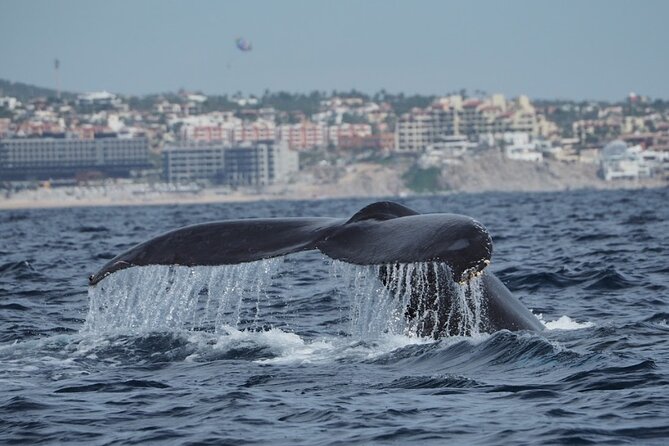
This tour’s hydrophone system is one of the most practical reasons to choose it. Seeing a whale is powerful, but hearing whale song underwater is different. It adds a sense of presence, and it makes your brain connect a visible behavior to a whole communication world beneath the surface.
In the tour description, the hydrophone is specifically mentioned along with the haunting songs humpbacks produce. That matters because humpback “singing” isn’t just a fun add-on. It’s part of how they communicate and coordinate behavior during migration.
Practically, what you can do is lean into the crew’s guidance when the hydrophone is active. Ask what sound you’re hearing and what it likely means in that moment. The better you connect your listening to what you see above, the more the trip sticks with you long after the boat ride ends.




Small group of 6: more attention, less chaos
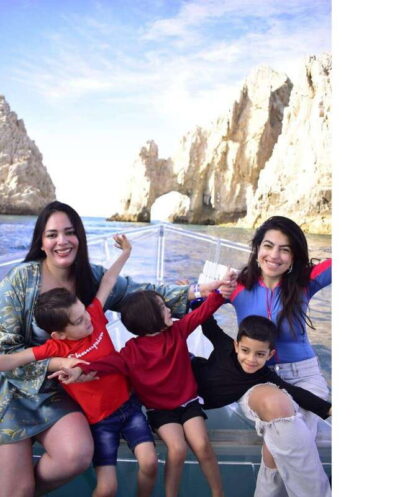
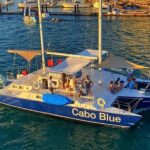
This is one of those details that changes the whole vibe. The tour has a maximum of 6 travelers, which is far from the crowded feel you might associate with some popular Cabo activities.
What you gain with a tiny group:
- More focused guidance when whales are spotted
- Better viewing placement because the crew isn’t trying to manage a large deck
- Easier communication with the captain and guides during active moments
- Less waiting around in a crowd when sightings happen
Reviews specifically praised Captain Miguel’s ability to find multiple sets of whales during a 2-hour excursion and to position people for real action, not just distant spotting. That’s exactly what smaller groups are built for: the crew can put you in the right spot faster.
Also, a small-group tour tends to feel more like a shared experience rather than a production. If you want a whale moment that feels human-scale, this one fits.
Wildlife respect: how to get thrill without turning it into chaos
Whale watching is at its best when it’s controlled and respectful. The tour description emphasizes knowledgeable captains and passionate guides, and reviews point out that the operation is respectful toward wildlife and avoids the frantic behavior that turns whale encounters into a pursuit.
Even without making it complicated, you can think of it like this: when the crew is careful, the whales are more likely to keep acting naturally. That increases your odds of seeing real behaviors—breaches, blows, tail activity—rather than just a bunch of frantic surface movement.
One extra benefit that came through in reviews: people weren’t only talking about whales. They also mentioned rays jumping and playing. That’s a sign the trip is paying attention to the broader ocean life, not only chasing the biggest whale you can find.
Whale Defender: why your ticket supports more than a photo
This tour ties in with a Whale Defender campaign aimed at protecting whales for future generations. You’re told your booking supports efforts to enforce regulations, collect research, and report data.
That’s not just feel-good marketing. In real-world conservation, enforcement and data collection are what turn awareness into protection. If you care about the difference between seeing whales and helping keep them safe, this mission matters.
How to think about it as a buyer: you’re not only paying for a good day on the water. You’re also funding the administrative side of whale protection—things like research and compliance work that don’t create instant souvenirs, but do support long-term outcomes.
Weather and whale timing: the one reality check
This experience requires good weather, and the tour can be canceled if conditions are poor. If that happens, you’ll be offered a different date or a full refund. Also, the tour requires a minimum number of travelers, so if that number isn’t met, you’ll get a different date/experience or a full refund.
The main takeaway for your planning: build in flexibility. Whale watching is a wildlife encounter, not a fixed-performance show. Even at the end of a migration period, you might still get a strong session—one mom-and-baby encounter can be worth everything. But you should pack the mindset that nature decides what kind of show you get.
Who should book this Cabo whale watching tour?
This tour is a strong fit if you want:
- A whale-focused outing (not just sightseeing)
- A smaller group where you get guidance and placement
- An experience that includes underwater hydrophone listening
- A conservation-minded operator connected to the Whale Defender effort
It may be less ideal if you’re the type of traveler who needs a guaranteed, specific sighting (like a breach on cue). Wildlife doesn’t do contracts. Still, the structure and crew skill aim to maximize your odds.
Should you book it? My practical take
If you’re in Cabo San Lucas with an open 2.5 hours and you care about learning as much as you do about seeing, I’d book this tour. The value isn’t only the chance of close whale action—it’s the hydrophone plus the small-group approach that makes the whole thing feel intentional.
One smart way to decide: if you want a whale experience where you’ll both watch and listen, this is the kind of outing that delivers that two-part payoff. If you’re scheduling tightly and can’t handle possible weather changes, you’ll want a backup plan for the day—because this activity depends on conditions and the sea doesn’t read calendars.
FAQ
How long does the whale watching tour in Cabo San Lucas take?
It’s approximately 2 hours 30 minutes.
What is the price per person?
The price is $85.00 per person.
Where is the meeting point?
You meet at Dive Ninja Expeditions, Ignacio Zaragoza 345 Esq, 16 de Septiembre, Downtown, Centro, 23450 Cabo San Lucas, B.C.S., Mexico.
Do I get a mobile ticket?
Yes, the tour includes a mobile ticket.
How many people are on the tour at most?
The maximum group size is 6 travelers.
What happens if the tour is canceled due to weather?
If it’s canceled because of poor weather, you’ll be offered a different date or a full refund.
What if the minimum number of travelers isn’t met?
If the tour is canceled because the minimum number isn’t met, you’ll be offered a different date/experience or a full refund.
Is it easy to cancel if plans change?
Cancellation is free. You can cancel up to 24 hours in advance for a full refund.
Is this tour suitable for most travelers?
Most travelers can participate.