REVIEW · CABO SAN LUCAS
PADI Open Water Course in Cabo San Lucas
Book on Viator →Operated by Dive Ninja Expeditions · Bookable on Viator
Cabo San Lucas is a great place to start your PADI Open Water certification, because the town sits where the Sea of Cortez meets the Pacific Ocean. You’ll train with a small group max of 4, so your instructor can give real feedback instead of repeating the same thing all day.
I also like how the course is built for actual learning: eLearning theory first, then a guided equipment run-through, pool practice, and finally four open-water sessions to finish your certification. One thing to plan around is time and conditions—PADI eLearning can take 6–10 hours, and the ocean sessions require good weather.
In This Review
- Key highlights at a glance
- Cabo San Lucas as your classroom for PADI Open Water
- The course flow: eLearning, skills review, pool time, then four open-water sessions
- Day-by-day schedule in Cabo: 8:00 am start, pool in the morning, open water after lunch
- Pool practice that builds confidence fast (and why it matters)
- Instructors who teach patience, not just technique
- What you’ll learn about local ecosystems while you train
- Pricing and value: is $620 fair for this PADI Open Water course?
- Who this Cabo PADI Open Water course fits best
- Practical tips to make your course smoother
- Should you book this PADI Open Water course in Cabo San Lucas?
- FAQ
- How long is the PADI Open Water course in Cabo San Lucas?
- What time do we meet on the first day?
- Where does the course start?
- Does the course include eLearning?
- How many ocean training sessions are included?
- What’s the maximum group size?
- What happens if weather affects the ocean sessions?
Key highlights at a glance
- PADI Open Water Diver structure: theory, pool practice, then four open-water sessions
- Max 4 travelers: more hands-on coaching and fewer waiting laps in the water
- Built-in equipment training: you learn how gear works before you head out
- Cabo location for great in-and-out-of-water scenery: the peninsula rock formation is part of the vibe
- Instructors who stay patient when things get hard: you’ll see this reflected in real student stories
Cabo San Lucas as your classroom for PADI Open Water
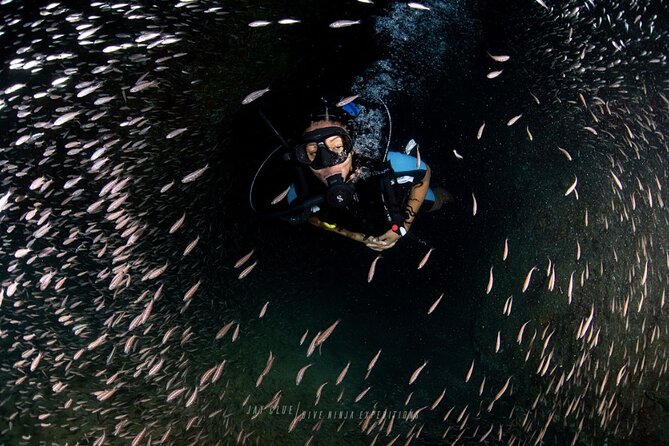
Cabo San Lucas has a special geographic setup for scuba training. The city sits right at the meeting point of two different water worlds—the Sea of Cortez and the Pacific Ocean. That means your learning experience isn’t just theory on a screen followed by generic water work. Even before you get fully geared up, the setting feels like part of the course.
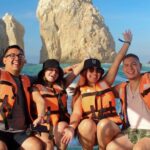
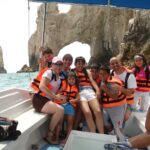
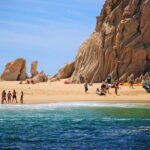
The other standout detail is the peninsula end rock formation that creates a dramatic spectacle both from land and while you’re in the water nearby. You won’t need to be a photo fanatic for this to matter. It helps you feel like you’re doing something bigger than a basic badge.
I also like that this course doesn’t pretend you’ll become a confident diver overnight. It’s designed as three steps: learn concepts, practice skills, then apply them in open water with instructor oversight. That sequence is what keeps the training grounded—and it’s what makes the certification feel earned.
You can also read our reviews of more tours and experiences in Cabo San Lucas.
The course flow: eLearning, skills review, pool time, then four open-water sessions
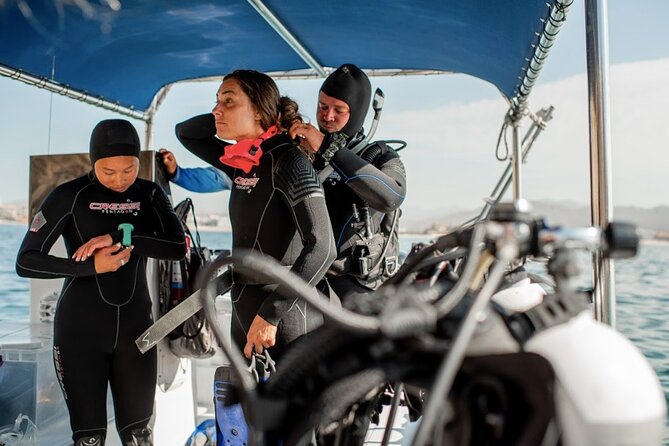
Here’s the rhythm you’ll follow.
Step 1: Theory via PADI eLearning. After you book, you complete the eLearning at a time that works for you. Plan on 6–10 hours to finish it, since you’ll need to answer quizzes and exams before meeting your instructor. The good part? You can start anytime, and you can go at your pace as long as you arrive ready for the review.
Step 2: Theory review and equipment basics with your instructor. Once you meet the instructor, you’ll review what you completed online. Then you’ll go through how the equipment works—this matters more than people expect. If you understand what each piece does before you ever stand in the pool, you’ll spend less time panicking and more time learning.
Step 3: Pool practice. You then move to a pool to work on core scuba skills in a controlled environment. Expect hands-on repetition with your instructor guiding you through the mechanics, safety checks, and comfort-building steps.
Step 4: Four open-water sessions over two days. Finally, you finish your certification with four open-water sessions across 2 days. The point isn’t to rush. It’s to give you enough time to put the pool skills to work in real conditions.
That “practice in the pool before open water” sequence is a big value for you. If open water feels intimidating (it does for many first-timers), you’ll have muscle memory and basic gear confidence before the ocean asks anything of you.
Day-by-day schedule in Cabo: 8:00 am start, pool in the morning, open water after lunch
On your training days, expect a straightforward schedule with clear start time.
You meet at 8:00 am at the Dive Ninja Expeditions location in downtown Cabo San Lucas (Ignacio Zaragoza 345 Esq, 16 de Septiembre, Centro, 23450 Cabo San Lucas, B.C.S., Mexico). The activity runs for about 2 days, and the pace is intense in a good way: you’re always moving from one learning block to the next.
A typical day looks like this:
- Morning: meet the instructor at 8:00 am, then go to the pool to practice skills
- After lunch: head out again around 1:00 pm for two ocean training sessions
Your course duration is listed as 2 days 6 hours (approx.), but the real total time includes your eLearning work before you ever meet the instructor. The course ends back at the same meeting point.
One practical note: Cabo mornings can feel cool, and afternoons can feel warmer. If you’re the kind of person who gets cold easily, pack accordingly for the times between water sessions.
Pool practice that builds confidence fast (and why it matters)
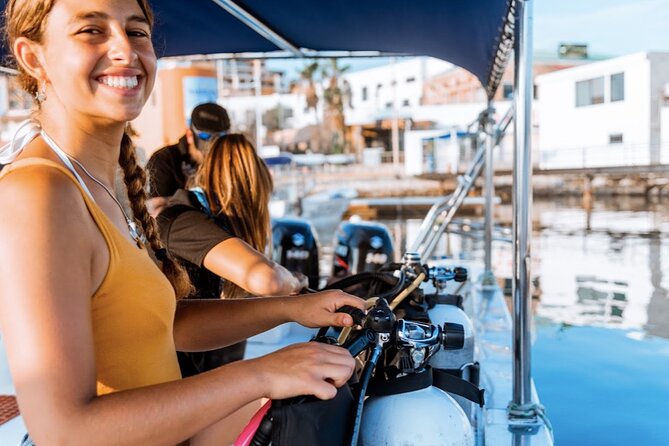
If you’ve never been in scuba gear before, the pool part is where the course earns its keep. Pool practice lets you focus on fundamentals without the extra pressure of open-water conditions.
From the way the program is described, your training includes:
- Skill practice after you learn equipment functions
- Instructor-led review after your eLearning theory
- Repetition until you can perform core movements reliably
One student story also highlights that the pool refreshed most skills, even though certain comfort areas like equalization may not feel fully natural right away. That’s normal. Equalization is one of those skills you learn in stages, and comfort often grows through repetition rather than one perfect moment.
If you’re nervous, the pool is also where you get a chance to reset. If something doesn’t click immediately, you have time to try again with your instructor guiding you through the same concepts in a calmer environment.
And because the group max is 4 travelers, you’re less likely to feel like you’re waiting your turn. That matters when you’re trying to get comfortable with breathing, buoyancy, and basic control.
Instructors who teach patience, not just technique
The strongest theme in the real student experiences is instructor support. Multiple names show up in reviews, and the consistent thread is how instructors adjust to different comfort levels.
Here are a few instructors you may work with, based on student feedback:
- Fabiano / Fab / Fabien (described as patient, enthusiastic, and effective for first-time certification)
- Le Roux (credited for excellent instruction during reactivation after time away from scuba)
- Johnny (praised for clear explanations and patience)
- Joy (praised alongside other team members as friendly and passionate)
- Victoria and Laura (mentioned as part of the instructor team experience)
- Marcus (mentioned in a student shout-out)
What this signals for you: the team isn’t only focused on completing checklists. It’s focused on keeping you safe and comfortable while you learn.
That matters because one student described starting the first day feeling seasick with a small panic moment, and the instructor stayed patient and supportive. If you’re worried about feeling overwhelmed, tell your instructor early. The course structure already gives them multiple “touch points” where they can correct, slow down, and help you find calm.
Also, one review calls out that an instructor speaks French, English, and Spanish. If language comfort helps you learn faster, it’s worth asking what language options are available when you confirm your schedule.

What you’ll learn about local ecosystems while you train
The training isn’t only about buoyancy and gear handling. Students specifically mention that the team teaches about different ecosystems.
Even without getting overly technical, this kind of context can change how you experience the ocean sessions. Instead of feeling like you’re just performing skills, you’ll have a framework for what you’re seeing and why it matters.
And because the Cabo setting is distinctive—where sea conditions differ and the coastline has that signature rock formation—you’ll likely feel the environment is part of the lesson. That’s one reason a scenic location matters for a certification course. It turns what could be a checklist experience into something you’ll remember.
Pricing and value: is $620 fair for this PADI Open Water course?
At $620 per person, this isn’t the cheapest way to get scuba certified. But it also isn’t priced like a bare-bones, impersonal assembly line.
Here’s where the value comes from:
- You’re getting a full PADI Open Water training path: theory, pool practice, and four open-water sessions
- The course includes an equipment learning phase before you go into the water
- The group is limited to max 4 travelers, which typically means more instructor attention
- You complete the structure over 2 days, which is efficient if you’re on vacation
What you should factor in on your side:
- Your schedule needs room for eLearning. With 6–10 hours online, you’ll want to start early rather than cramming the night before
- Ocean sessions depend on conditions. The experience requires good weather, so expect that nature can affect the timing
If you want certification without weeks of back-and-forth, this is a fairly practical setup. If your budget is tight, you might compare against smaller local variations, but you’d be trading away structured training time and the small-group feel.
Who this Cabo PADI Open Water course fits best
This course is a strong match if you:
- Want a recognized certification with a clear structure
- Like a small-group learning environment (max 4 travelers)
- Prefer to do the theory first, then focus on hands-on skills
- Are okay spending time on eLearning before you arrive
It’s also worth considering for people doing a refresher. One student did a reactivate-style experience after 5 years away and found the pool training helpful for skills they needed to refresh.
You might want to think twice if:
- You hate committing 6–10 hours to online theory
- You’re extremely sensitive to ocean motion and don’t have a strategy for seasickness
- You’re traveling during a period when you might face weather-related changes
Practical tips to make your course smoother
A few things will help you feel more confident from the first morning:
- Start eLearning early so the in-person review feels like reinforcement, not a scramble
- Tell your instructor if you tend to get motion sickness or anxiety in the water
- Plan to arrive rested. A full schedule of pool practice plus ocean sessions is demanding, even when you’re excited
- Bring a change of clothes and a towel. You’ll be switching environments (pool to ocean) more than once across the day
Also, keep in mind your learning pace is tied to performing skills correctly, not just showing up. The course is designed for safety and real competence, so treat each session like practice, not a performance.
Should you book this PADI Open Water course in Cabo San Lucas?
Yes, you should book it if you want a structured PADI Open Water path that gets you certified efficiently, with small-group attention and a clear progression from eLearning to pool skills to four open-water sessions.
It’s also a good fit if you care about instruction quality and patience—based on repeated feedback tied to instructors like Fabien/Fab, Joy, and Johnny. The team seems especially good at helping students through discomfort, not just pushing forward.
Hold off if you can’t commit to the eLearning time or you know you’re likely to struggle in the ocean environment without extra support. In that case, you’ll want to plan for a longer break or discuss concerns before confirming dates.
FAQ
How long is the PADI Open Water course in Cabo San Lucas?
The practical part runs over 2 days, with a total duration listed as about 2 days 6 hours (approx.). You’ll also need time to complete the PADI eLearning theory.
What time do we meet on the first day?
You meet at 8:00 am at the meeting point in downtown Cabo San Lucas.
Where does the course start?
The meeting point is at Ignacio Zaragoza 345 Esq, 16 de Septiembre, Downtown, Centro, 23450 Cabo San Lucas, B.C.S., Mexico.
Does the course include eLearning?
Yes. The course includes PADI eLearning, which can take 6–10 hours to complete with quizzes and exams before you meet your instructor.
How many ocean training sessions are included?
The course finishes with 4 open-water sessions over the two days to complete your certification.
What’s the maximum group size?
The experience has a maximum of 4 travelers.
What happens if weather affects the ocean sessions?
The experience requires good weather. If it’s canceled due to poor weather, you’ll be offered a different date or a full refund.