REVIEW · CABO SAN LUCAS
Los Cabos: Camel Ride in the Canyon & Thrilling Water-Slides
Book on GetYourGuide →Operated by Wild Canyon Adventures · Bookable on GetYourGuide
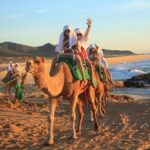
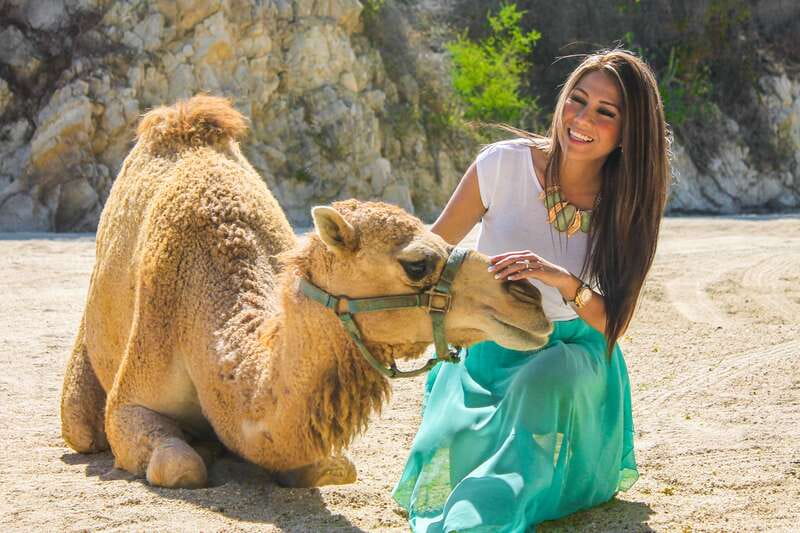
A desert canyon, minus the usual sand. In El Tule Canyon, you’ll ride camels past a green oasis bottom while the sun keeps glinting toward the Sea of Cortez. I like that the experience is rooted in real animal handling, not just a quick photo stop, and I also love how the canyon setting makes the whole thing feel oddly magical for a place that’s surrounded by desert.
The best part for me is the way the day mixes activities without turning into a chaotic carnival. You get Lion’s Den food and a proper camel ride, and you even get time to interact with rescued animals after. One thing to plan for: phone cameras are not allowed, so you’ll need to rely on the on-site photo team and spend extra if you want prints.
Quick take: what makes this tour work
- El Tule Canyon oasis rides: the trail runs along the bottom where vegetation stays lush
- Camel briefing first: you learn camel care and habitat basics before you mount up
- Small group (max 14): easier pacing than the big-bus style tours
- Animal sanctuary time: you can feed and interact with rescued species like macaws and iguanas
- Food and drinks included: quesadilla + guacamole + chips and salsa, plus a smoothie or tequila shot or daiquiri
- Water time built in: the itinerary includes swimming and the activity name includes water-slide fun
In This Review
- Entering El Tule Canyon’s Desert Oasis World
- Camel 101 Before You Mount: Safety, Habitat, and Real Interaction
- The Camel Ride Itself: Moving Along the Oasis Bottom
- Animal Sanctuary Time: Feeding Rescued Macaws, Lovebirds, and More
- Lion’s Den Restaurant: Quesadillas, Guacamole, and Your Drink Choice
- Water Fun and Thrills: Swimming Breaks and Slides in the Mix
- Price and Logistics: What $115 Covers and What Costs Extra
- Who This Tour Suits (and Who Should Skip It)
- What to Bring (So You Don’t Melt or Get Frustrated)
- Final Call: Should You Book Camel Ride in the Canyon and Water Fun?
- FAQ
- How long is the camel ride and canyon tour?
- Is the park entry fee included in the price?
- Do I need to pay for transportation?
- What’s included with the meal?
- Can I take photos with my phone or camera?
- What’s the minimum age, and are there child-sized camels?
- Who can’t participate for safety reasons?
Entering El Tule Canyon’s Desert Oasis World
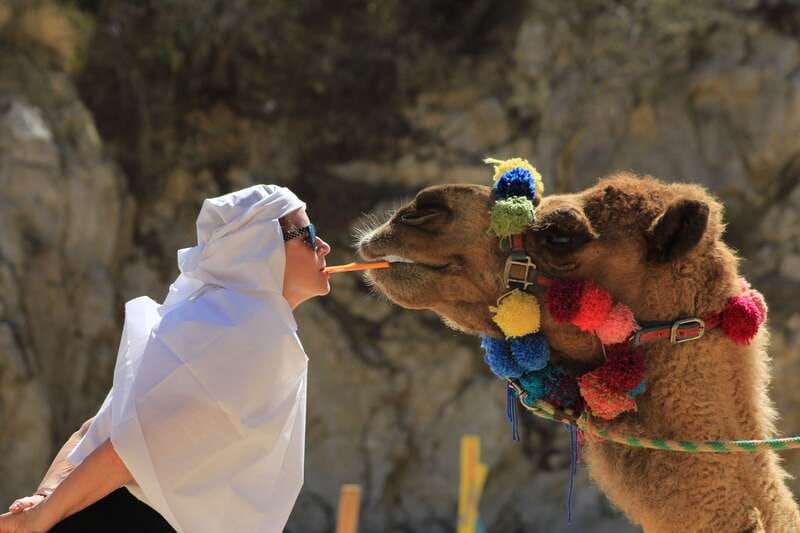
El Tule Canyon is the kind of place that makes you do a double take. You’re in Baja California Sur, in a dry region where you expect dust and heat, yet the canyon holds an oasis at the bottom. That oasis is what keeps the greenery alive, and it’s the reason the camel ride feels more like a guided walk through a hidden pocket than a ride through open sand.
The view angle is part of the magic. You’ll keep the sun and bright sky in your line of sight, and you can often catch that postcard feeling with the Sea of Cortez nearby. In practical terms, it means your photos and your memories don’t depend on one single scenic overlook. The ride route and the canyon setting do the work.
I also like the pacing concept here: you’re not just thrown on a camel and sent off. You arrive, meet the animals, learn the basics, and then you ride through the green pocket of the canyon. It’s a good way to keep kids engaged too, because the experience has multiple stages instead of one long stretch on a single activity.
Camel 101 Before You Mount: Safety, Habitat, and Real Interaction
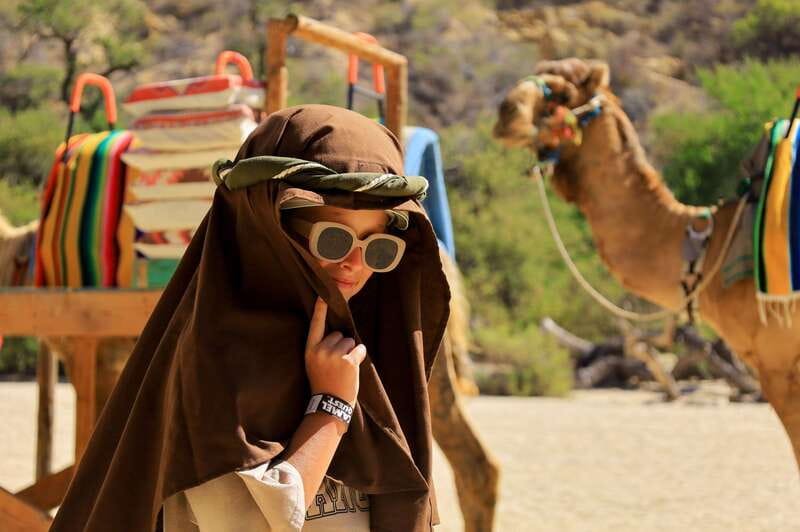
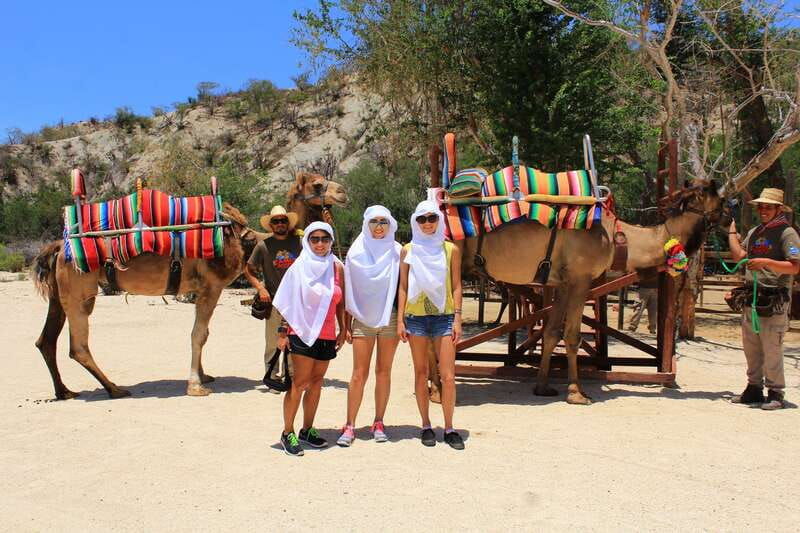
Before the ride, your guide sets the tone with a camel introduction and games. It’s not just “say hi and go.” You’ll learn fascinating facts about your camel’s behavior and how they live, and you’ll get a sense of what to do around them so you don’t feel clumsy or out of place.
This part matters because a camel isn’t a pony. You’ll have a better time if you understand the basics: calm handling, how close to stand, how to move with the animal, and what not to do. The tour is clear about training and safety steps, and that shows up in how they structure the pre-ride briefing.
You might even meet standout characters in the herd. Names like Manel Sahara have come up as a memorable camel in the group. That kind of detail is usually a sign the handlers know how to make the animals feel like part of the story, not just equipment.
Important note: the park staff doesn’t allow cameras, so you’ll be fully present with the animals. In other words, you’ll be doing more than watching from behind a phone screen.
You can also read our reviews of more tours and experiences in Cabo San Lucas.
The Camel Ride Itself: Moving Along the Oasis Bottom
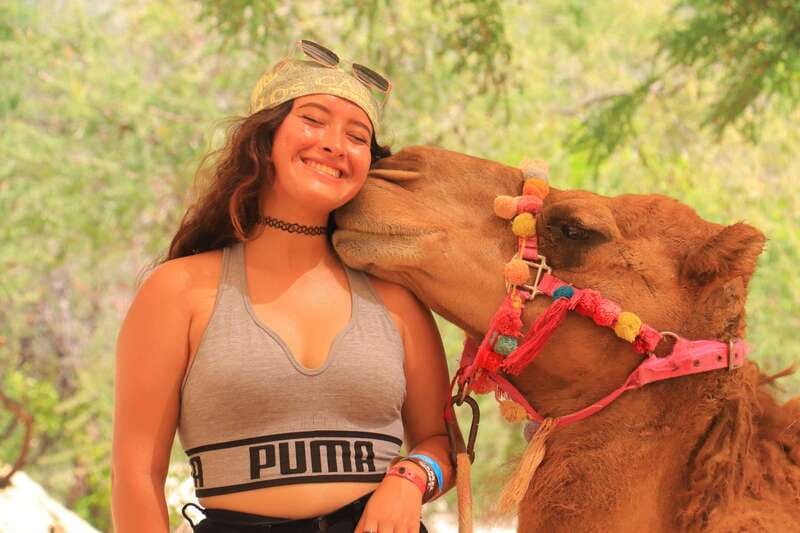
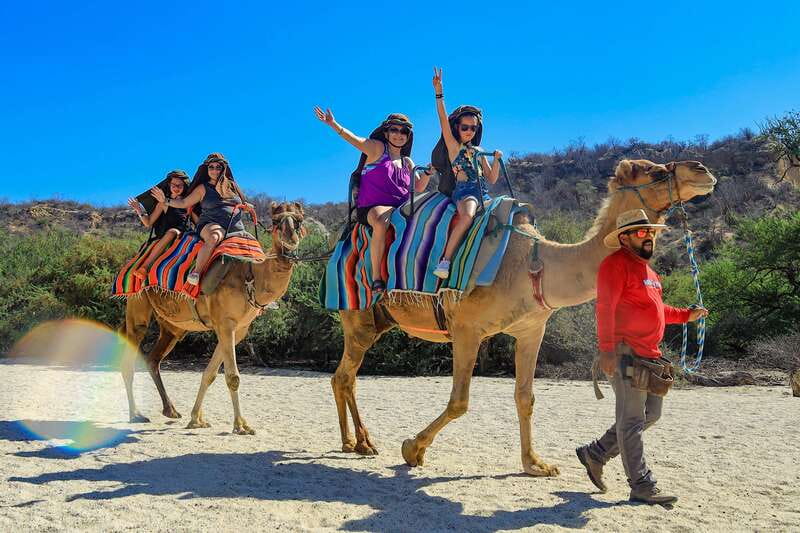
Once you’re set up, the camel ride takes you through the oasis that sits at the bottom of the canyon. This is the route you’ll want to think about when you’re deciding if this tour is worth it.
Why? Because the oasis is what makes the ride visually different from the camel rides you might find in drier areas. You’re not riding through the same barren scenery the whole time. Instead, you’re traveling through the greener zone that keeps the canyon feeling alive.
Expect the ride to feel like a guided, scenic experience rather than a nonstop sprint. The tour time includes wildlife viewing and guided moments, so you’re likely to get stops where you can look around and take it in. With kids, this works well because you can treat each segment like a mini-mission: meet camels, ride, look at wildlife, then move on.
One practical consideration: it can be hot. Even with hydration stations available to refill your water bottles, a desert canyon sun can still feel intense. If you’re traveling in warmer months, plan to wear sunscreen and a hat, and be ready to move at a relaxed pace.
Animal Sanctuary Time: Feeding Rescued Macaws, Lovebirds, and More
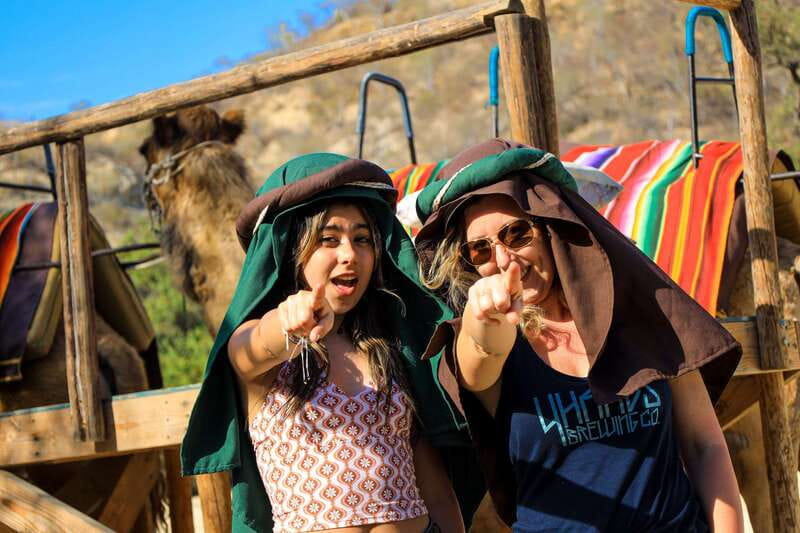
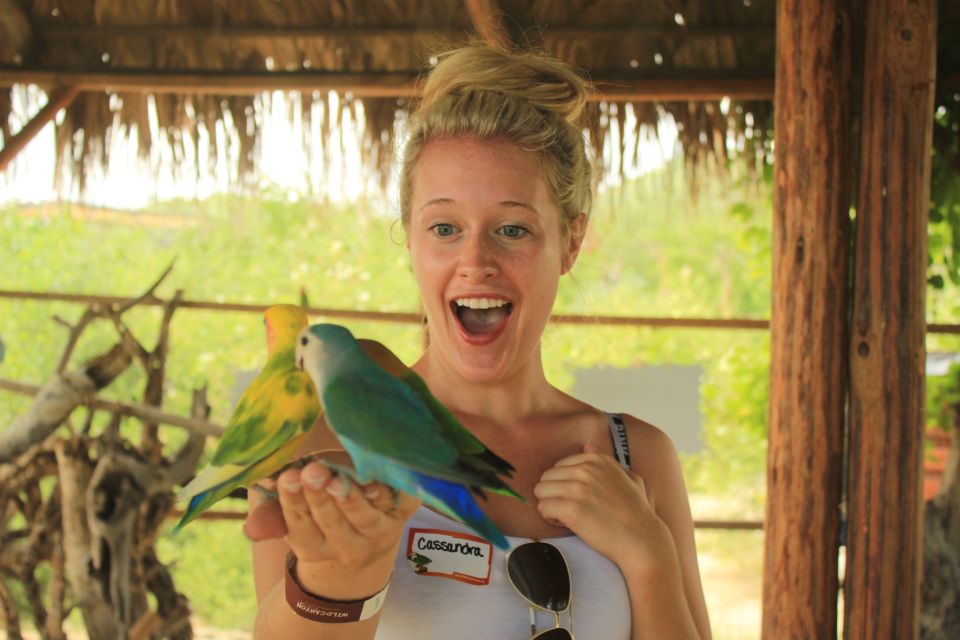
After the camel ride, you get an animal sanctuary segment where you can feed and interact with rescued animals. The species mentioned include macaws, lovebirds, iguanas, and other rescued animals.
This is one of the most meaningful parts of the tour, and it’s also where the experience earns its “more than just a ride” feeling. Camel rides are fun, but the sanctuary time gives the day a purpose. You’re not just collecting entertainment. You’re seeing animals in a care setting and learning how they’re managed.
It also changes the tone of the day. If you’re thinking the tour will be purely outdoors and purely about riding, the sanctuary moment adds a calmer, more personal feel. Kids often like it too because there’s usually a clear interaction moment, and adults appreciate that it’s not just a quick look.
If you care a lot about animal welfare, this is the segment where you’ll feel the most aligned with the tour’s mission. The tour notes that camel care matters to them, including avoiding conditions that could irritate their skin, which is another hint that the animals’ comfort is treated as real, not cosmetic.
Lion’s Den Restaurant: Quesadillas, Guacamole, and Your Drink Choice
Food is included, and it’s one of the simplest reasons this tour can feel like good value. At Lion’s Den Restaurant, you’ll get a meal that includes quesadilla, guacamole, chips, and salsa, plus a choice of 1 smoothie or tequila shot or daiquiri.
That choice is a nice touch in a practical way. You can go kid-friendly with the smoothie, or adult-friendly with a cocktail option that fits the vacation vibe. It also means you don’t have to hunt down a restaurant right after the ride.
I also appreciate that the tour includes snacks and hydration stations. Desert activities burn through energy fast, and having something built into the timeline helps you avoid the classic vacation problem: everyone gets cranky before the main meal.
One heads-up: the experience uses no-phone camera rules. If you’re hungry, tired, and hoping to document everything, it can feel annoying at first. You’ll likely still want photos for the family album, so budget a little extra if you plan to buy images from the on-site photographer.
Water Fun and Thrills: Swimming Breaks and Slides in the Mix
The activity is marketed as camel ride plus thrilling water slides, and the itinerary includes swimming time. In the real world, this usually means you’ll get a change-of-pace moment when it’s time to cool off.
What you can count on is that the schedule is built to include water time after the earlier canyon and sanctuary portions. That’s a smart design for families, especially when kids have more energy than patience. Camel rides are slower. Water is not.
If you’re the type who gets motion-sick easily, the tour doesn’t list that as a concern, but it does restrict people with vertigo. So if that’s relevant to you, this may not be the best fit.
For everyone else: bring that swim-ready mindset. Wear comfortable clothing, and expect you’ll be mixing walking with occasional water play.

Price and Logistics: What $115 Covers and What Costs Extra
At $115 per person for a 3-hour experience, the big question is whether you’re getting a full day of value in a short window. For this tour, you are getting a lot inside the package: camel ride, camel interaction, guided tour, local snacks, and a meal at Lion’s Den with guacamole and quesadilla. Plus, hydration stations are included so you’re not stuck paying for bottled water during the heat.
But don’t miss the add-ons:
- Park entry fee is extra: $25 per person
- Transportation is extra at check-in: round trip is $10 USD per adult (ages 13+) and $5 USD per kid (ages 4–12)
- If you’re staying in Zona Diamante or Puerto Los Cabos, transportation is higher: $20 per adult and $10 per kid
That means your total cost may end up notably higher than $115 once everything is added. Still, if you’re a family booking multiple people, the package can stay competitive because food and a guided animal program are bundled.
Logistics also matter in Cabo. Pickup is included from hotel areas (El Tule, Zona Hotelera, Cabo San Lucas, and the tourist corridor), but drivers wait no longer than 5 minutes after the scheduled pickup time. Also, pickup timing isn’t set until you contact the call center, so don’t assume it’s automatically lined up.
If you hate being rushed, build in buffer time for pickup and plan to return with the group schedule rather than expecting an instant depart the second your last activity ends.
Who This Tour Suits (and Who Should Skip It)
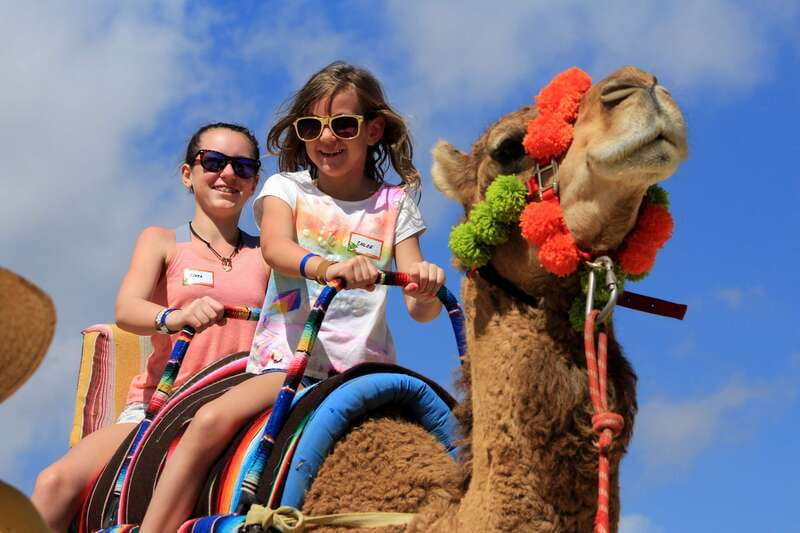
This experience is designed for active people who can handle varied terrain. The minimum age is 4, and there are regular- and child-sized camels, which is a strong sign the tour is set up for families rather than only adults.
Small-group size helps too. The cap is 14 participants, which usually keeps the pace manageable and the guide less stretched thin.
But there are clear safety restrictions. The tour won’t allow participation for:
- pregnant women
- people with heart, back, or neck problems
- people with vertigo or osteoporosis
- people with mobility impairments
- people over 260 lbs (118 kg)
Also, you need to be fit enough to walk on varied terrain, not just stand by the path.
If your group includes someone who needs accessibility accommodations or has mobility limits, you’ll want to look for a different activity. For everyone else, this can be a great family day because you get multiple activity styles: ride time, wildlife viewing, sanctuary time, and water fun.
What to Bring (So You Don’t Melt or Get Frustrated)
This tour is short, so the packing list matters.
Bring:
- passport or ID card
- comfortable shoes (closed-toe)
- sunscreen
- hat and sunglasses
- cash for souvenirs, food, and photos
You should also plan for no-camera rules. Cameras and likely phone camera use aren’t permitted. The tour says professional photographers will capture the adventure. That means you can still end up with photos, but you should expect to pay if you want copies.
And because it’s a canyon environment with sun and water time, pack like you’re mixing desert walking with a swim stop: light layers, breathable clothing, and a plan for staying comfortable if you get wet and then have to walk again.
Final Call: Should You Book Camel Ride in the Canyon and Water Fun?
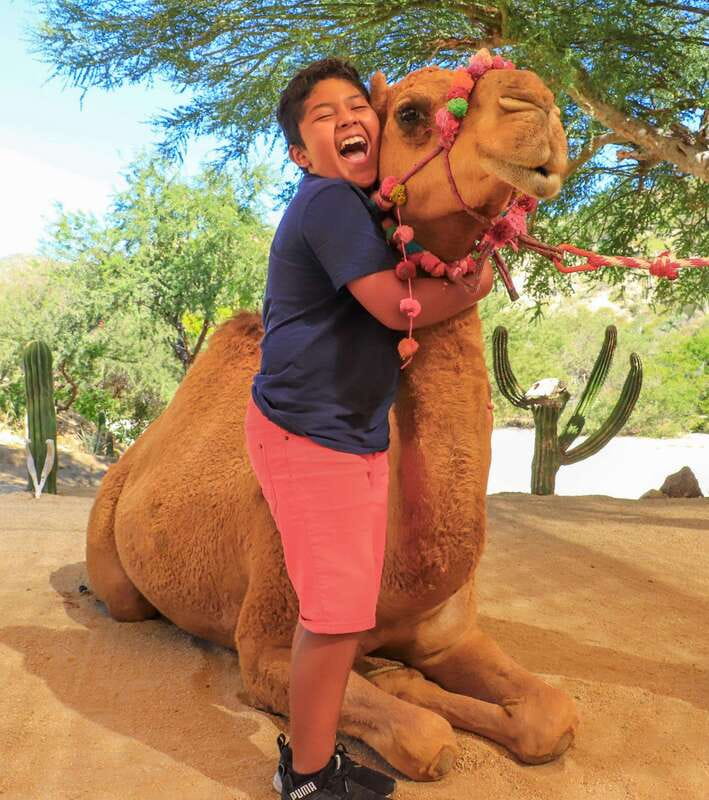
I’d book this tour if you want a compact Los Cabos experience that mixes camel care education, a real canyon setting, and animal sanctuary interaction, all with a meal included. The camel ride plus rescued animal time is the combo that makes it feel more substantial than a typical quick attraction.
I’d think twice if you dislike heat, hate strict photo rules, or you’re chasing a bargain where every extra fee hurts. Between the $25 park entry fee and transportation add-ons, the total can rise fast. Also, if you’re sensitive to long waits after activities, ask about timing up front and plan your return buffer.
Best fit: families with kids age 4+ who want a memorable outdoor day, and adults who like animal-focused activities more than pure adrenaline.
If that sounds like your group, this is a strong choice in the Cabo mix.
FAQ
How long is the camel ride and canyon tour?
The duration is listed as 3 hours. The experience includes guided activities and time for multiple segments like the camel ride and wildlife viewing.
Is the park entry fee included in the price?
No. The park entry fee is listed as $25 and is not included in the $115 price.
Do I need to pay for transportation?
Transportation is not included in the base price. Transportation must be paid at check-in, with round-trip rates listed by age, and higher rates if you’re staying in Zona Diamante or Puerto Los Cabos.
What’s included with the meal?
At Lion’s Den Restaurant, the included meal includes quesadilla, guacamole, chips and salsa, plus 1 smoothie or tequila shot or daiquiri.
Can I take photos with my phone or camera?
No. Cameras are not allowed. Professional photographers will capture your adventure, and you can purchase photos if you choose.
What’s the minimum age, and are there child-sized camels?
The minimum age is 4 years. The experience notes regular- and child-sized camels, so kids can participate if they meet the age requirement.
Who can’t participate for safety reasons?
The tour lists restrictions including no participation for pregnant women, people with heart/back/neck problems, people with vertigo or osteoporosis, people with mobility impairments, and people over 260 lbs (118 kg).