REVIEW · CABO SAN LUCAS
Cabo Turtle Release
Book on Viator →Operated by Cabo Trek · Bookable on Viator
Baby turtles at sunset is hard to beat. I love the round-trip transport and the fact that you’ll learn directly from marine biologists during the release, not just watch from the sidelines. This Olive Ridley hatchling experience is an easy, all-ages way to support conservation—but keep in mind there’s no hotel pick-up, so you’ll need to get yourself to the meeting point.
The tour runs about 3 hours and starts at 4:00 pm—timed for that Pacific golden hour. It’s also capped at a small group size of max 8, which helps when you’re asking questions and when kids are watching every tiny move.
In This Review
- Key Highlights You’ll Feel Fast
- Why the Cabo Olive Ridley Release Happens at Sunset
- Price and Logistics: $109, Meeting Point, and 4:00 pm Start
- The Small-Group Marine Biology Lesson with Sylvia and Juan
- From Transport to Beach Time: What the 3-Hour Flow Looks Like
- The Hatchling Moment: Held in a Bowl, Then Set Loose
- What You’ll Actually Learn About Marine Conservation
- Comfort for Families: Minimal Effort and All-Ages Pacing
- Bring This, Skip That, and Plan for Bugs and Dusk
- Is It Worth It? Rating, Value, and the Main Trade-Off
- Should You Book Cabo Turtle Release?
- FAQ
- How long is the Cabo Turtle Release tour?
- What time does the experience start?
- Where do I meet for the tour?
- Is hotel pick-up included?
- What’s included in the price?
- How many people are in the group?
- What if the weather is bad or I need to cancel?
Key Highlights You’ll Feel Fast
- Small group (max 8) keeps the moment calm and the Q&A focused
- Marine biologists guide the whole release, including why this matters
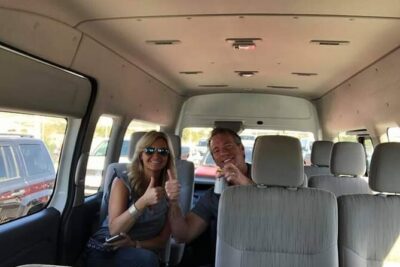
- Convenient round-trip transport from the central meeting point
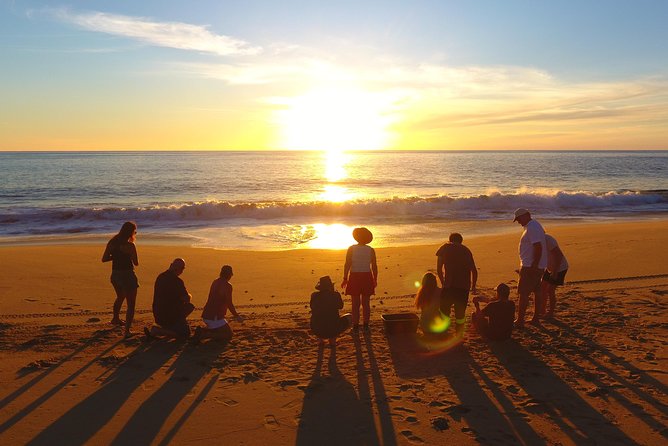
- 4:00 pm sunset timing for a very photogenic, very special hour
- Easy pace for toddlers with very little physical effort needed
Why the Cabo Olive Ridley Release Happens at Sunset
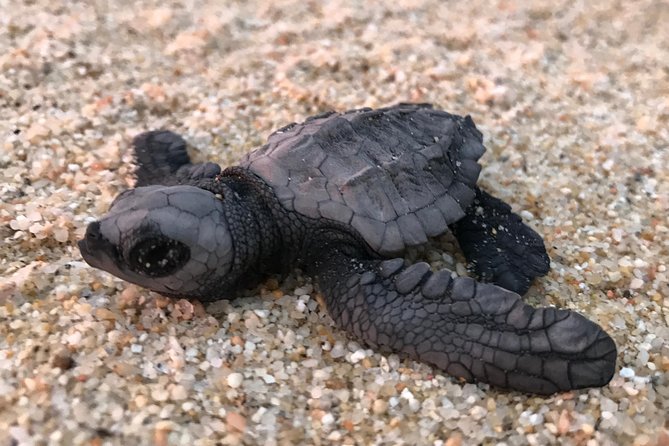
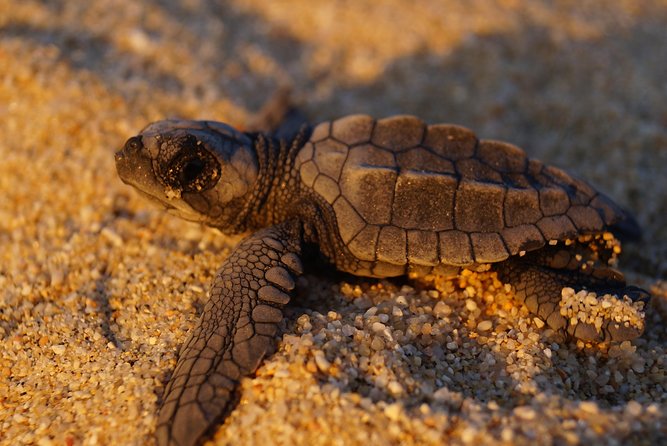
Cabo San Lucas is known for big scenery, but this tour’s real draw is smaller and more urgent: baby turtles heading for the ocean. Each year, Olive Ridley turtles (one of the six species that visit Baja California Sur) return to reproduce and nest. This program is timed so you’re there right when the hatchlings are ready to take their first steps.
The sunset piece matters. The tour is built around evening light and a beach moment on the Pacific—when you can often get that mix of wonder and calm. And because the tour is short (about 3 hours), you’re not stuck doing a long day of logistics just to reach one meaningful event.
There’s also a practical side to all this. Watching a natural process up close, then hearing from the people working to protect it, turns conservation from an abstract idea into something you can point to and understand.
You can also read our reviews of more tours and experiences in Cabo San Lucas.
Price and Logistics: $109, Meeting Point, and 4:00 pm Start
At $109 per person, this is priced more like a guided activity than a generic excursion. What you’re paying for isn’t just access to a beach—it’s the scientific instruction and the chance to participate in a structured release.
Here’s what makes the logistics relatively easy:
- Start time: 4:00 pm
- Duration: around 3 hours
- Meeting point: CaboTrekHotel Tesoro, Blvd. Paseo de la Marina 20-Local A, Centro, 23450 Cabo San Lucas, B.C.S., Mexico
- End: back at the meeting point
And here’s what you need to plan around:
- Hotel pick-up is not included. You’ll need to be at the CaboTrekHotel Tesoro area.
That matters for value. If your hotel is far from the meeting point, you may spend extra time on your own transportation. On the upside, you do get transportation from the meeting point to the activity location, plus water.
One more timing tip: the tour is often booked about 40 days in advance on average. If you’re traveling during a busy season or with a family schedule, I’d lock it in early so you’re not hunting for last-minute spots.
The Small-Group Marine Biology Lesson with Sylvia and Juan
This is not a hands-off “look at stuff” tour. A marine biologist leads the experience and keeps it interactive, answering questions as you go. The focus is on marine biology and conservation—how these turtles live, what makes the species special, and what helps them survive.
From the guides’ names shared in experiences, you may meet Sylvia or Juan during the program. Either way, the pattern is consistent: you get an explanation before the release and then you’re given clear instructions for what to do during the moment.
What I like about this approach is that it respects your attention span. Even when you’re with kids, you’re not just herded around. You’re learning in the same order as the event: species basics first, conservation context next, then the release.
And since the tour is offered in English, you’ll get full benefit from the explanations without guessing at the details.
From Transport to Beach Time: What the 3-Hour Flow Looks Like
The tour is set up for a simple flow: meet up, get transported, participate, then return. Because it’s only about 3 hours, you’re not committing to a full afternoon that can derail other plans.
A typical rhythm looks like this:
- You gather at CaboTrekHotel Tesoro at 4:00 pm.
- The team provides transportation to the activity location, and you get water.
- You’ll hear the marine biology briefing and learn what you’re doing and why.
- Then you move to the beach release moment—timed for sunset.
- You head back to the meeting point at the end.
Why this structure is valuable: it reduces stress. You’re not coordinating extra buses or trying to find the beach on your own at dusk. You also avoid the long wait that can happen when tours are bigger and more chaotic.
One caution to keep in mind: this experience depends on good weather. If conditions aren’t right, the operator may offer a different date or a full refund.
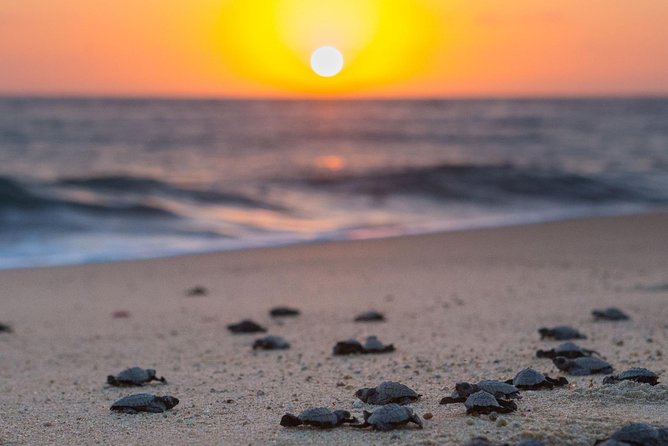
The Hatchling Moment: Held in a Bowl, Then Set Loose
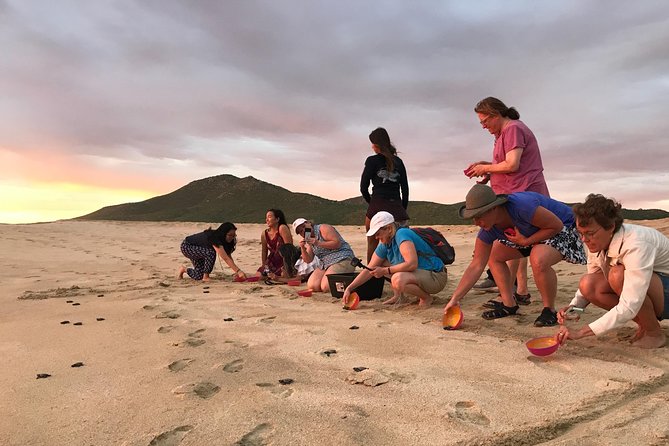
Here’s the part everyone talks about: releasing the baby turtles into the wild.
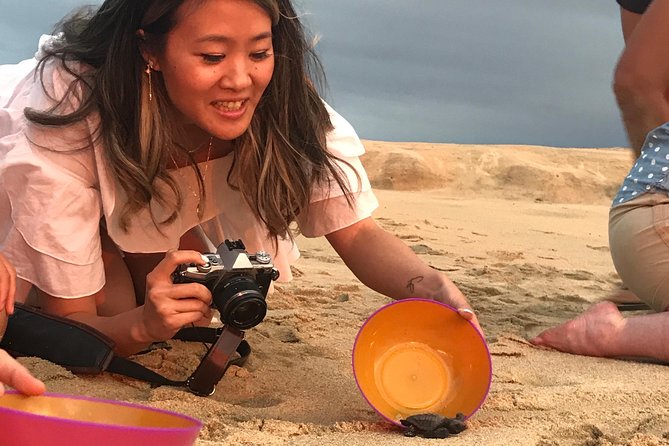
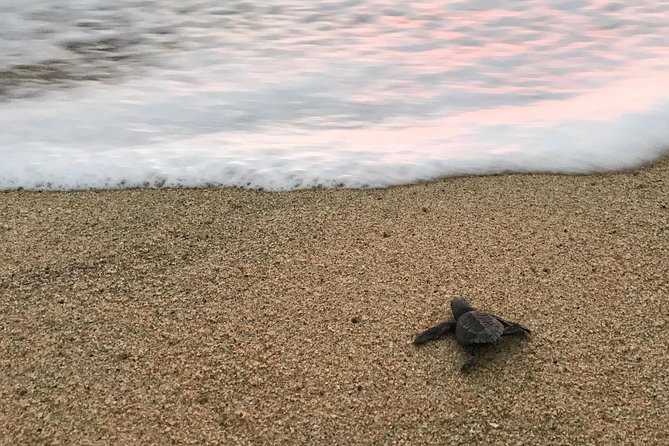
Important practical detail: you’re not meant to hold the hatchlings in your own hands. Instead, they’re typically held in a bowl, and then guided onto the sand for their journey toward the ocean. That keeps the process safer for the animals and clearer for participants—especially kids.
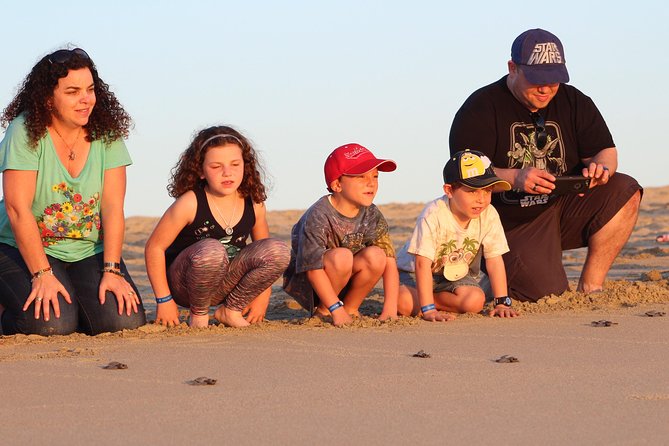
When it happens, you’ll watch the hatchlings move and try to reach the water. There’s a strong emotional payoff here, but the tour keeps it grounded in instruction. You’re not just participating blindly. You’re participating with a plan and with scientists nearby to explain and oversee.
Some groups have released large numbers during a single outing (for example, one experience noted 177 hatchlings). Even if your group releases fewer, the feeling can still be intense because it’s immediate and physical—like witnessing a moment that normally happens out of sight.
Also, the setting helps. The sunset timing and the quiet beach vibe make the moment feel focused, not like a busy attraction.


What You’ll Actually Learn About Marine Conservation
The tour isn’t only about the release—it’s about what the release represents. The biologist shares info tied to:
- the turtles’ life cycle and nesting behavior
- the specifics of the species you’re helping
- conservation efforts and how these actions support survival
This matters because the turtle hatchlings’ first steps are a high-stakes window. From what you’re taught, the program is designed for a carefully timed helping hand—supporting the hatchlings as they begin the journey to the sea.
I also appreciate that the tour frames your role without guilt-tripping you. You’re not asked to fix the entire ocean. Instead, you’re given a clear, concrete way to contribute to conservation and awareness, then you get to witness the natural process with expert guidance.
And yes, photos are a big part of the memory. People have described the pictures as something they’ll treasure—because the sunset light plus the hatchling moment makes for genuinely meaningful images.
Comfort for Families: Minimal Effort and All-Ages Pacing
If you’re traveling with kids, this is one of those rare activities that’s easier than it sounds.
The tour is built for all ages, and the effort level is low. You won’t need to do anything athletic or complicated. Even toddlers can have a good time because the main event is watching, listening, and participating in a short release moment.
That helps families in two ways:
- Everyone can stay involved without energy burn.
- The group size stays small, so the experience doesn’t turn into a long, loud scramble.
The evening timing also works for many families. Instead of a full midday marathon, you get a shorter program that ends back near the meeting point.
Just plan for a basic reality: dusk on the coast can mean bugs and cooler air than you expect. So bring your comfort items and be ready to follow the guide’s instructions closely.
Bring This, Skip That, and Plan for Bugs and Dusk
From the way the experience is handled, you should expect some practical support. Water is included, and some experiences have also noted snacks, drinks, and bug repellent being provided.
Still, I’d treat the “bring it” checklist like this:
- Comfortable shoes you don’t mind getting sandy
- A camera (or phone) with enough battery for sunset
- A light layer for late-day coastal air
- If you’re sensitive to insects, take repellent seriously and use it
Also, if you’re the type who wants every detail and photo angle, go in with patience. This is a guided natural moment, not a theme park where you get unlimited retakes. The release is time-sensitive and the hatchlings are unpredictable by nature.
The good news: the small-group setup makes it easier to manage your expectations. You’ll usually have room to watch without constantly squeezing past people.
Is It Worth It? Rating, Value, and the Main Trade-Off
This experience has a 4.9/5 rating and 98% recommended—that’s strong proof that people are leaving satisfied. Most of the praise centers on the combination of:
- the marine biology instruction
- the chance to participate in a conservation-focused release
- the sunset beach setting
- staff support and smooth handling during the moment
Now, the value question. At $109, you’re paying for expertise and the structure around a wildlife event. The cost makes sense if:
- you want more than a view and you care about conservation learning
- you’re traveling with children and want a low-effort, high-meaning activity
- you can make the 4:00 pm start and the meeting point works for your schedule
The main trade-off is also clear: no hotel pick-up. If you don’t want to coordinate your own ride to CaboTrekHotel Tesoro, you may feel the logistics drag a bit.
Weather is the other big variable. Since it requires good conditions, your plan needs flexibility.
Should You Book Cabo Turtle Release?
Book it if you want a short, family-friendly sunset activity with science behind it, and you like the idea of doing one real conservation action rather than just watching from a distance.
Skip it only if:
- you strongly prefer hotel pick-up and don’t want to travel to the meeting point yourself
- you can’t be flexible with timing or weather-dependent outdoor plans
- you’re expecting a long, elaborate tour. This is more about one focused, meaningful moment than a full-day itinerary
If your schedule allows it, I think this is one of the easiest ways to get a genuine, memorable connection to Baja’s turtle life—guided by marine biologists and timed to the moment when hatchlings need help most.
FAQ
How long is the Cabo Turtle Release tour?
It runs for about 3 hours (approx.).
What time does the experience start?
The tour starts at 4:00 pm.
Where do I meet for the tour?
Meet at CaboTrekHotel Tesoro, Blvd. Paseo de la Marina 20-Local A, Centro, 23450 Cabo San Lucas, B.C.S., Mexico.
Is hotel pick-up included?
No. Hotel pick-up is not included, but you do get transportation from the meeting point to the activity location.
What’s included in the price?
You get water and transportation from the meeting point to the activity location.
How many people are in the group?
The tour has a maximum of 8 travelers.
What if the weather is bad or I need to cancel?
The experience requires good weather. If it’s canceled due to poor weather, you’ll be offered a different date or a full refund. You can cancel for free up to 24 hours in advance for a full refund; canceling later than that doesn’t receive a refund.